

Federal Reserve: Backstop doubts and high intervention bar – BNY
BNY’s David Tam stresses that while the Federal Reserve retains legal capacity to support corporate credit, the current Warsh Fed is unlikely to repeat Covid‑era interventions. He sees no immediate alarm, with tight spreads and solid demand, but warns that in a future selloff investors cannot rely on dealers or the Fed to quickly contain a sharp widening in credit spreads.
Warsh Fed seen reluctant to intervene
"The Fed has the legal authority and institutional capacity to intervene in the event of a truly disorderly widening of credit spreads. During the early days of Covid, the Fed set up the Primary Market Corporate Credit Facility (PMCCF) and Secondary Market Corporate Credit Facility (SMCCF). The PMCCF ultimately saw no take-up while the SMCCF only saw $14bn, well below the headline capacity, but the programs are often credited with narrowing spreads through an announcement effect."
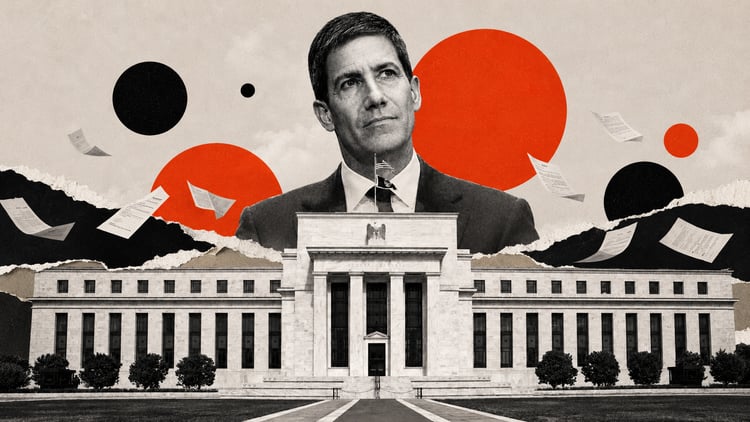
"Critics of the Covid interventions respond, however, that the PMCCF, SMCCF and other Fed programs increased moral hazard. Our view is that the bar is extremely high for the Warsh Fed to intervene in private markets to address a widening of credit spreads in the way that the Fed has in the past. The Warsh Fed is more likely to view such an event as a localized crisis or an opportunity to impose discipline in a market that has enjoyed almost 20 years of a more interventionist Fed."
"To be clear, we see no immediate cause for alarm. At least at the moment, Bid-Ask spreads remain narrow, dealers are structurally short IG credit, end investor demand appears to be holding up, and spreads remain near their tightest levels. But investors should be aware that in the event of a selloff, some of the typical circuit breakers, a marginal end investor ready to step in, the dealer community, or the Fed might not be as willing or able to contain a gap wider in spreads."
"As dealers are the first line of defense in a selloff, keep an eye on dealer net positioning and total fails. Dealer positioning moving more toward neutral or even net long might suggest greater balance sheet constraints and a continued rise in fails could suggest intermediation frictions."
"Keep an eye both on spreads and on long-end yields. A widening in credit spreads might suggest that investor sentiment is cooling, while a decline in long-end yields might make the value proposition less compelling."
(This article was created with the help of an Artificial Intelligence tool and reviewed by an editor. Know more.)













