What is Leverage in Forex?
In forex trading, leverage is the use of borrowed money from a broker to control a larger position with a smaller amount of your own capital. For beginner traders in India, knowing the meaning of leverage is vital because it can quickly magnify both profits and losses when you trade currency pairs such as USD/NR or EUR/USD.
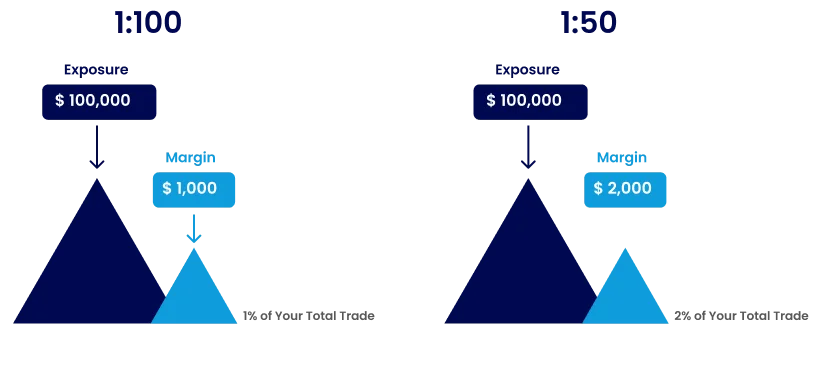
Leverage in forex is usually shown as a ratio that compares your market exposure with the margin you must deposit. For example, with 1:100 leverage a trader can control 100 dollars in the market for every 1 dollar of their own funds.

How Does Forex Leverage Work?
Forex leverage links your margin to a much larger position by combining your deposit with funds lent by the broker. When you open a leveraged trade, you deposit margin, the broker provides the rest, and the total becomes your position value. The leverage ratio, such as 1:10, 1:30, or 1:100, tells you how many times larger the position is than your margin. Because the position is many times bigger than your own money, a small change in the exchange rate creates a much larger percentage gain or loss on your account than it would without leverage in forex.