Introduction
In forex trading, margin is a fundamental concept that enables traders to control larger positions than their initial capital by utilizing leverage. Essentially, margin represents the collateral or funds that traders allocate to open and sustain a leveraged position in the market.
Grasping how forex margin functions is vital, as it directly affects both risk exposure and potential returns. This overview will explain forex margin, its operational mechanics, the distinction between margin level and margin call, and the importance of understanding these concepts for effective risk management in forex trading.
Once you understand how margin is calculated, how margin level is tracked, and what happens when it drops too low, you can use leverage deliberately instead of by accident.
What is Margin in Forex?
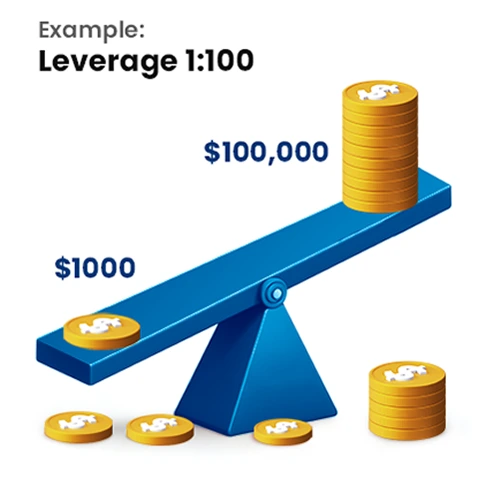
Margin in forex trading is the capital a trader must deposit to open a leveraged position. It is not a fee but serves as a good faith deposit — collateral to cover potential losses. Margin is typically expressed as a percentage of the total trade size. For example, with 100:1 leverage, opening a $100,000 position requires a $1,000 margin deposit. This enables traders to control larger positions than their account balance alone would allow, but also increases risk exposure if the market moves unfavorably.
Margin requirements aren't fixed, either — brokers set them based on the currency pair, your account type, and prevailing market risk, and they can tighten with little notice.
Important: Margin requirements can widen sharply around high-impact news releases or during thin weekend liquidity, even on pairs you trade regularly — always check your account's margin requirement before holding a position through one of these windows.
Margin vs Leverage: What's the Difference?
Margin and leverage describe the same trade from two different angles. Margin is the capital you actually put down; leverage is the multiplier that capital unlocks. A smaller margin requirement always means a higher leverage ratio, since the two move together as fixed sides of one equation.
How Do You Calculate Margin in Forex?
Required margin is calculated with a single formula:
If you're trading one standard lot (100,000 units) with 100:1 leverage, the math works out to $100,000 ÷ 100 = $1,000 in required margin. Trading a mini lot (10,000 units) at the same leverage drops that requirement to $100. Position size scales linearly, so doubling your trade size doubles your required margin at any fixed leverage ratio.
You don't need to run this manually every time — TMGM's Trading Calculator returns the exact margin required for any pair, lot size, and leverage combination before you place the trade.
What is Margin Level in Forex Trading?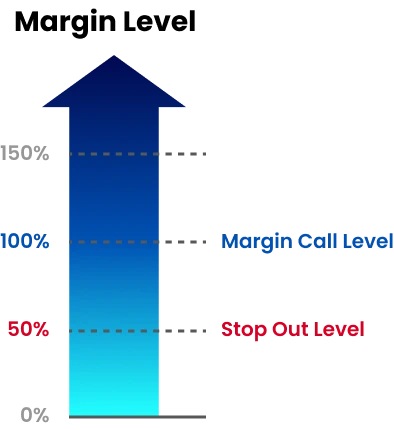
What is Margin Level in Forex?
In forex trading, the margin level is the percentage ratio of a trader’’s equity to used margin. It indicates how much capital is available relative to margin requirements.
How to Calculate "Margin Level" in Forex
Margin level is usually calculated using platform provided margin calculator, though the formula itself is
Equity here means your account balance adjusted for any floating profit or loss on open trades, not just your static balance. For example, if a trader has $1,000 equity and $500 used margin, the margin level is 200%.
Why Does Margin Level Matter in Forex Trading?
Forex brokers monitor margin levels to evaluate risk. When the margin level falls below a critical threshold, typically 100%, the broker may issue alerts or restrict new trades.
What is Free Margin vs. Used Margin in Forex Trading?

What is Free Margin in Forex?
Free margin is the amount of funds in the trading account available for opening new positions. It is the difference between equity and used margin.
What is Used Margin in Forex?
Used margin is the portion of funds locked in open trades. Once positions are closed, this margin is released and becomes free margin again.
Importance of Margin in Forex
Understanding the distinction between free margin and used margin is vital for effective position management, especially when multiple trades are active simultaneously.
What is a Margin Call in Forex?
A margin call is a notification from the broker indicating that the trader's equity has fallen below the minimum required margin level due to losses.
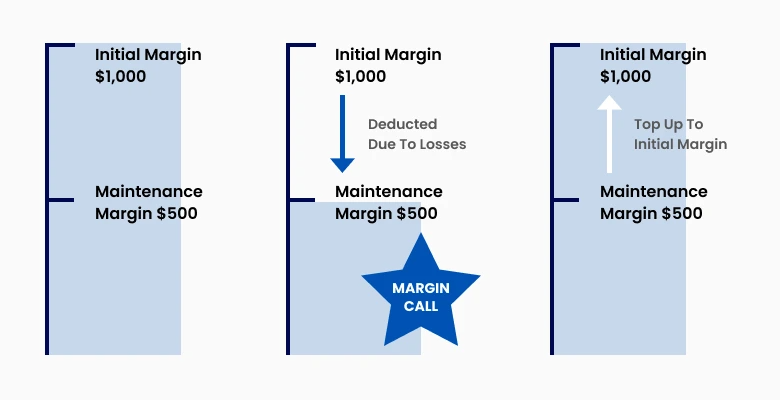
Margin level is calculated as (Equity / Used Margin) × 100. For example, if a trader has $1,000 equity and $500 used margin, the margin level is 200%. A margin call is a notification from the broker indicating that the trader'’s equity has fallen below the minimum required margin level due to losses.
Why Do Margin Calls Happen?
Margin calls function as a risk management tool to protect both the trader and the broker. They prevent further losses by requiring additional funds or closing positions.
How to Avoid Margin Calls
Effective risk management through appropriate position sizing and stop-loss orders reduces the chance of margin calls. Selecting leverage levels that match your risk tolerance is also crucial.
What Is a Stop-Out Level in Forex?
A stop-out level is the point at which your broker stops warning you and starts closing your positions automatically — typically when margin level falls to somewhere between 50% and 20%, depending on the broker. Unlike a margin call, a stop-out doesn't ask for your input: the broker closes your largest or most unprofitable positions first, in whatever order clears the account back above the stop-out threshold, and slippage during fast-moving markets means the closing price isn't guaranteed to match what you last saw on screen.
Pro Tip: A margin call is a warning; a stop-out is your broker acting without you. Treat the margin call as your actual deadline — waiting for the stop-out to tell you something's wrong usually means it's already too late to control the outcome.
Why does Forex Margin Matter?

Risk Management: Forex margin is critical for controlling trading risk. By managing leverage and margin levels, traders can avoid overexposure and limit potential losses.
Maintaining a Sustainable Balance: Balancing leverage with available free margin ensures traders have sufficient capital to endure market volatility and prevent forced liquidations.
Empowering Strategy: A thorough understanding of forex margin enables traders to develop more effective trading strategies, maximizing profits while minimizing risks.
What are some Common Mistakes when Managing Forex Margin?
Over-leveraging: Applying excessive leverage without fully understanding margin requirements can cause rapid losses, especially in volatile markets.
Ignoring Margin Calls: Neglecting margin calls or margin level warnings increases the risk of forced liquidation.
Not Monitoring Free Margin: Regularly tracking free margin is crucial as it determines the trader’’s capacity to open new trades and manage existing positions.
Why Trade Forex Margin With TMGM?
TMGM is regulated by ASIC (Tier-1), VFSC, the Seychelles FSA, and the Mauritius FSC, and has operated since 2013 — a regulatory footprint that matters directly when you're trading on margin, since it's tied to protections like negative balance protection, which caps your losses at your account balance even if a stop-out can't close positions fast enough in an extreme move.
Indian traders can open an account with a minimum deposit of around ₹9,154 (~$100) [confirm current figure before publishing], and trade through MT4, MT5, or the TMGM App, using market, limit, or pending orders across TMGM's range of 12,000+ CFD instruments. Every account has access to the TMGM Trading Calculator to check exact margin requirements before placing a trade, alongside a free demo account for practicing margin and leverage without risking real capital.
Beyond the core trading tools, TMGM clients get access to copy trading, AI-driven tools like Market Buzz and AI Arena, integrated market insights inside the TMGM App, and 24/7 multilingual support by phone and email. Funding is available via bank transfer, cards, or e-wallets, with e-wallet withdrawals processed within 24 hours and bank transfers in 2–5 business days. Traders who prefer a swap-free structure can also open an Islamic account.