

Trading
Explore a wide range of markets with competitive pricing, deep liquidity, and advanced trading tools.
Learn More 
Platform
Trade seamlessly with TMGM's powerful platform, built for speed, precision, and a superior trading experience.
Learn More Trading Platform
Academy
Learn the fundamentals of trading with beginner-friendly resources, including guides, webinars, and market insights.
Learn More News & Analysis
Get real-time market updates and expert analysis to stay ahead of trading opportunities
Learn More News & Analysis
About
Learn what sets TMGM apart — our global presence, regulatory strength, and commitment to innovation in trading.
Learn More Why Choose TMGM
Sponsorship
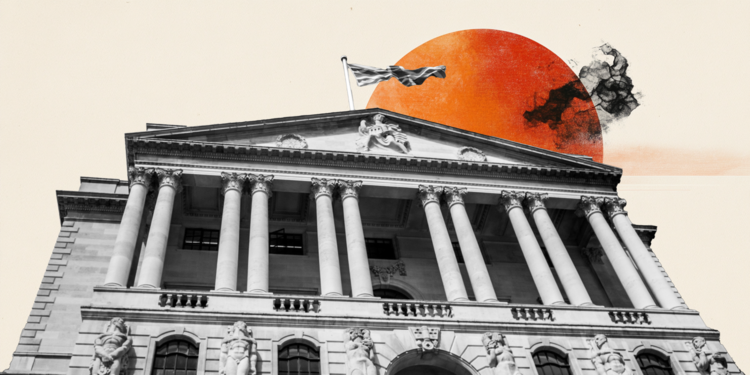
Bank of England: How is the energy shock shaping the rate path? – ING
Further Bank of England (BoE) rate rises in November and February are expected by ING’s James Smith as a precaution against second-round inflation effects, despite limited evidence that higher energy prices are feeding through more broadly. Smith forecasts that United Kingdom (UK) inflation will briefly touch 4% this winter, but believes policymakers may be more confident by spring that inflation risks are contained. That could open the way for rate cuts from November 2027 and into 2028.
Could BoE rate hikes give way to a gradual policy reversal?
"For the Bank of England, this poses a dilemma. While economic growth has been more resilient than feared, and the jobs market is stabilising, there’s very little evidence so far that the energy shock is spilling into other parts of the inflation basket. Nor is there much evidence that it will do so over the next few months."
"So when the Bank likely hikes rates in early November, it will be entirely for risk management reasons. The truth is it’s still early days and officials will want another few months of data before concluding that the storm has passed. In the meantime, headline inflation is likely to briefly peak at 4% this winter – something officials have historically argued tends to raise the risks of second-round effects."
"We’re less convinced. We expect hikes in both November and February, but by the spring, we think the Bank will be more confident in calling the ‘all clear’ on second-round effects."
"If we’re right, then we think the Bank can start cutting rates again by next November and into 2028."
(This article was created with the help of an Artificial Intelligence tool and reviewed by an editor. Know more.)
POPULAR ARTICLES
1How is the energy shock shaping inflation in the United Kingdom? – ING2Poland: What does fiscal change mean for bond positioning? – BNY3United States: What are the pre-election tail risks? – Danske Bank4United States EIA Heating Oil Stocks Change above expectations (0M) in October 16: Actual (0.652M)5United States EIA Gasoline Stocks Change below expectations (0M) in October 16: Actual (-2.952M)6United States EIA Distillate Stocks Change above expectations (0M) in October 16: Actual (1.675M)7United States EIA Crude Oil Stocks Change below expectations (-0.8M) in October 16: Actual (-3.061M)8United Kingdom: How much room does the Budget have amid limited fiscal flexibility? - Nomura9Higher US yields weigh on silver price, while Iran tensions cushion losses
LIVE QUOTES


ALL ABOUT FOREX
Margin Call Meaning: What It Is, What Triggers It, and How to Avoid One
What Is an Islamic Account in Forex?
Best Indicators for Forex Trading and How to Use Them
The Top 10 Most Traded Currency Pairs in the World
What are the Major Forex Pairs? 7 Major Currency Pairs in the World
5 Best Forex Trading Apps In India In 2026
Top 15 Weakest Currencies in the World
Best Time to Trade Forex
Forex Trading Regulations in India
Get Started!
Sign up and access the Global Markets in less than 3 minutes

Connect With Us









Contacts
Phone: +61 2 8036 8388
Fax: +61 2 8036 8388
Email: support@tmgm.com



The information provided on this website is of a general nature only and does not constitute personal financial advice. Before acting on any information on this website, you should consider the suitability of the information in relation to your objectives, financial situation and needs. Investing in CFDs and FX Margin Contracts carries significant risks and is not suitable for all investors. You may lose more than your initial deposit. You do not own, or have, any interest in the underlying asset. We recommend that you seek independent advice and ensure you fully understand the risks involved before trading. It is important that you read and consider the disclosure document before you acquire any product listed on the website. The information and advertisements offered on this website are not intended for use by any person in any country or jurisdiction where such use would be contrary to local laws and regulations. The Products and Services offered on this website are not intended for residents of the United States, Malaysia and Thailand.
TMGM is authorized and regulated in various jurisdictions.
Trademax Australia Limited, trading as TMGM, is regulated by the Australian Securities and Investments Commission (ASIC), AFSL no. 436416 and is located at Level 28, One International Tower, 100 Barangaroo Avenue, 2000 Sydney, NSW Australia.
Email: support@tmgm.com.au
Trademax Global Limited, trading as TMGM, is authorized and regulated by the Vanuatu Financial Services Commission (VFSC), registration number 40356 and registered at 1276, Kumul Highway, Port Vila, Vanuatu, Republic of Vanuatu.
Email: support@tmgm.com
Trademax Global Markets (SE) Limited, trading as TMGM, is authorized and regulated by the Financial Services Authority (FSA) of Seychelles, with license number SD224. The company is registered at Office No 13, Providence Estate ABIS Centre, Mahe, Seychelles.
Email: support@tmgm.com
Trademax Global Markets (International) Pty Ltd, trading as TMGM, is authorized and regulated by the Financial Services Commission, Mauritius (FSC) with license no. GB22201012, and registered at 33, Edith Cavell Street C/o IQ EQ Fund Services (Mauritius) Ltd Port Louis, 11324 Mauritius.
Email: support@tmgm.com
Copyright © TMGM. All rights reserved