

Сауда
Бәсекеге қабілетті бағалар, жоғары өтімділік және озық сауда құралдары арқылы нарықтардың кең ауқымын зерттеңіз.
Толығырақ 
Платформа
TMGM-нің жылдамдыққа, дәлдікке және жоғары деңгейлі сауда тәжірибесіне арналған қуатты платформасымен сауданы кедергісіз жүргізіңіз.
Толығырақ Сауда платформасы
Академия
Бастауыштарға арналған нұсқаулықтар, вебинарлар және нарық талдаулары сияқты ресурстар арқылы сауданың негіздерін үйреніңіз.
Толығырақ TMGM Академиясы
Жаңалықтар және талдау
Сауда мүмкіндіктерінен алда болу үшін нақты уақыттағы нарық жаңартулары мен сараптамалық талдауды алыңыз
Толығырақ Жаңалықтар және талдау
Туралы
TMGM-ді ерекшелендіретін жайттарды біліңіз — біздің жаһандық ауқымымыз, реттеушілік беріктігіміз және трейдингтегі инновацияларға деген адалдығымыз.
Толығырақ Неліктен TMGM-ді таңдау керек
1.3140: From a safety net to a ceiling for GBP/USD
- GBP/USD rebounds to near 1.3110 after a sharp two-day decline.
- Fed’s hawkish undertone continues to strengthen the US Dollar.
- UK Retail Sales rose 0.7% MoM in October vs. estimates of flat performance.
The British Pound (GBP) snaps the two-day decline and rebounds to near 1.3110 against the US Dollar during the European trading session on Friday. The GBP/USD pair attracts bids after hitting a fresh almost a year low at 1.3079 earlier in the day.
The Cable regains a temporary ground as the rally in the US Dollar hits a brief pause. As of writing, the US Dollar Index (DXY), which gauges the Greenback’s value against six major currencies, trades marginally lower to near 103.85 after posting a fresh 19-month high near 104.00 the previous day.

The outlook of the US Dollar appears bullish on the back of fears that the Federal Reserve (Fed) will deliver back-to-back interest rate hikes in the near term.
Dollar strength underpinned as FOMC expectations swing hawkish again
Analysts at Rabobank highlight that the repricing of the US rate path has been substantial, with the OIS curve now implying that “investors are positioned for a full hike in December, followed by close to 70% of a 25bp hike priced in for the January meeting.” They note that this configuration is “in line with Waller’s comments, after having moved from one of the most hawkish to one of the most dovish FOMC members and now back among the most hawkish.” According to Rabobank, his recent calls are for “either a 50bp hike at the December meeting or a 25bp hike accompanied by clear forward guidance from Warsh that an additional hike will follow in January.” Against this backdrop, the bank observes that “the USD has continued to dominate FX markets, with the DXY Index climbing back to levels not seen since 2025 on the back of elevated US hiking expectations and safe-haven demand.”
On the British Pound front, the United Kingdom (UK) Retail Sales data for October has come in stronger than expected. The Office for National Statistics (ONS) reported that Retail Sales grew 0.7% Month-on-Month (MoM), while the growth was expected to remain flat.
GBP/USD Technical Analysis
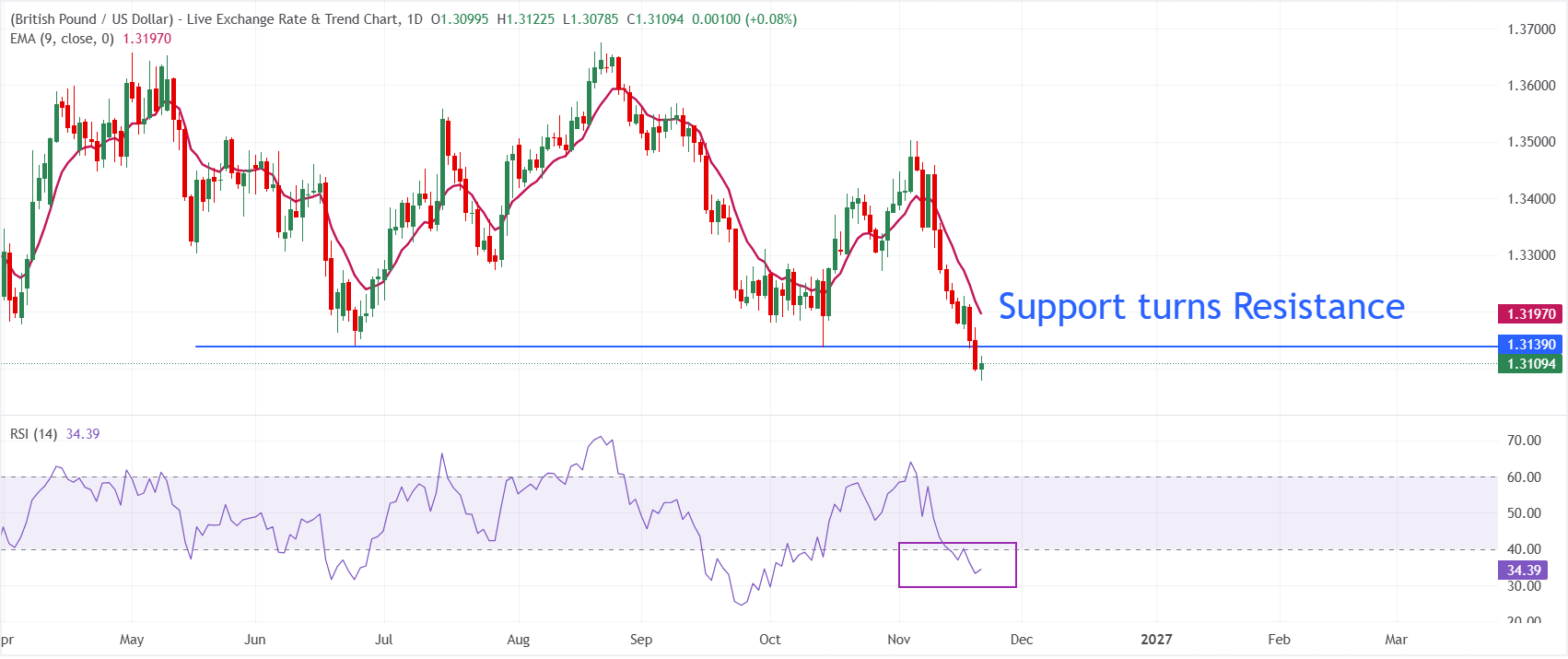
In the daily chart, GBP/USD trades at 1.3109, extending a bearish near-term bias as spot holds beneath the 9-period Exponential Moving Average (EMA) at 1.3197. The pair remains pressured while this short-term EMA caps rebounds, although the Relative Strength Index (RSI) around 34 suggests downside momentum is losing some intensity rather than accelerating into oversold territory.
The breakdown of the June 24 low at 1.3140 has also boosted fears of a fresh downside leg, which will act as key hurdle for the pair going forward. Looking down, the pair could extend its decline towards 1.3000.
(The technical analysis of this story was written with the help of an AI tool. Know more.)
Economic Indicator
Retail Sales (MoM)
The Retail Sales data, released by the Office for National Statistics on a monthly basis, measures the volume of sales of goods by retailers in Great Britain directly to end customers. Changes in Retail Sales are widely followed as an indicator of consumer spending. Percent changes reflect the rate of changes in such sales, with the MoM reading comparing sales volumes in the reference month with the previous month. Generally, a high reading is seen as bullish for the Pound Sterling (GBP), while a low reading is seen as bearish.
Read more.Last release: Fri Nov 20, 2026 07:00
Frequency: Monthly
Actual: 0.7%
Consensus: 0%
Previous: -0.4%
Source: Office for National Statistics
Үздік мақалалар
1Жапон иенасы: ЖИ-ге байланысты тәуекелден қашу иенаның АҚШ долларына қатысты нығаюына ықпал етуі мүмкін – MUFG2ФРЖ-ның мөлшерлемені көтеруіне қатысты күтулер мен мәжбүрлі сатылымдар қысымынан алтын наурыздан бергі ең күрт апталық құлдырауға бет алды3Швейцария франкі: АҚШ долларына қатысты 0,8485 деңгейіне дейін одан әрі әлсіреу - UOB4Оңтүстік Африка ранды: SARB-тың қатаң ұстанымы саясат пен металдар ықпалының көлеңкесінде қалды – Commerzbank5Ripple бағасына болжам: Binance биржасындағы ұсыныс тапшылығына қарамастан, XRP $1,00 деңгейіне қайта көтеріле алмады6Мексика песосы: ФРЖ-ның қатаң ұстанымы АҚШ долларына қатысты әлсіреуді күшейтуде – Societe Generale7ЕОБ өкілі Santos Pereira энергетика саласындағы инфляцияның бүкіл экономикаға таралу қаупіне назар аударды8Жасанды интеллект секторындағы жаппай сатылым АҚШ долларын әлсіретіп, Швейцария франкі жоғалтқан құнының бір бөлігін қалпына келтірді9Бүгінгі криптонарық: Ethereum бағасы түзеліп, XRP шоғырлану кезеңінде тұрған тұста Bitcoin бағасы 61 мың доллардан төмен түсуі мүмкін

Бастау!
Тіркеліп, 3 минуттан аз уақытта жаһандық нарықтарға қол жеткізіңіз

Бізбен байланысыңыз









Байланыстар
Телефон: +61 2 8036 8388
Факс: +61 2 8036 8388
Эл. пошта: support@tmgm.com



Осы веб-сайтта берілген ақпарат тек жалпы сипатта ғана ұсынылады және жеке қаржылық кеңес болып табылмайды. Осы веб-сайттағы кез келген ақпаратқа сүйенбес бұрын, оның сіздің мақсаттарыңызға, қаржылық жағдайыңызға және қажеттіліктеріңізге сәйкестігін бағалауыңыз керек. CFD және FX Margin Contracts-қа инвестиция салу елеулі тәуекелдермен байланысты және барлық инвесторлар үшін қолайлы емес. Сіз бастапқы салымыңыздан артық қаражат жоғалтуыңыз мүмкін. Сіз базалық активке ешқандай меншік құқығына немесе үлеске ие болмайсыз. Сауда жасамас бұрын тәуелсіз кеңес алуды және тәуекелдерді толық түсінуді ұсынамыз. Веб-сайтта көрсетілген кез келген өнімді сатып алмас бұрын, ақпараттық құжатты оқып, оны мұқият қарастыру маңызды. Осы веб-сайтта ұсынылған ақпарат пен жарнамалар жергілікті заңдар мен ережелерге қайшы келетін кез келген елде немесе юрисдикцияда тұратын адамдардың пайдалануына арналмаған. Осы веб-сайтта ұсынылатын Өнімдер мен Қызметтер Америка Құрама Штаттары, Малайзия және Таиланд тұрғындарына арналмаған.
TMGM әртүрлі юрисдикцияларда уәкілетті және реттеледі.
Trademax Australia Limited, TMGM атауымен жұмыс істейді, Австралияның Бағалы қағаздар және инвестициялар жөніндегі комиссиясымен (ASIC) реттеледі, AFSL № 436416 және мына мекенжайда орналасқан: Level 28, One International Tower, 100 Barangaroo Avenue, 2000 Sydney, NSW Australia.
Электрондық пошта: support@tmgm.com.au
Trademax Global Limited, TMGM атауымен жұмыс істейді, Вануату Қаржылық қызметтер комиссиясымен (VFSC) уәкілетті және реттеледі, тіркеу нөмірі 40356, тіркелген мекенжайы: 1276, Kumul Highway, Port Vila, Vanuatu, Republic of Vanuatu.
Электрондық пошта: support@tmgm.com
Trademax Global Markets (SE) Limited, TMGM атауымен жұмыс істейді, Сейшел аралдарының Қаржылық қызметтер басқармасы (FSA) тарапынан уәкілетті және реттеледі, лицензия нөмірі SD224. Компания мына мекенжайда тіркелген: Office No 13, Providence Estate ABIS Centre, Mahe, Seychelles.
Электрондық пошта: support@tmgm.com
Trademax Global Markets (International) Pty Ltd, TMGM атауымен жұмыс істейді, Mauritius Қаржылық қызметтер комиссиясымен (FSC) № GB22201012 лицензиясы бойынша уәкілетті және реттеледі, тіркелген мекенжайы: 33, Edith Cavell Street C/o IQ EQ Fund Services (Mauritius) Ltd Port Louis, 11324 Mauritius.
Электрондық пошта: support@tmgm.com
Авторлық құқық © TMGM. Барлық құқықтар қорғалған