

Trading
Explore a wide range of markets with competitive pricing, deep liquidity, and advanced trading tools.
Learn More 
Platform
Trade seamlessly with TMGM's powerful platform, built for speed, precision, and a superior trading experience.
Learn More Trading Platform
Academy
Learn the fundamentals of trading with beginner-friendly resources, including guides, webinars, and market insights.
Learn More News & Analysis
Get real-time market updates and expert analysis to stay ahead of trading opportunities
Learn More News & Analysis
About
Learn what sets TMGM apart — our global presence, regulatory strength, and commitment to innovation in trading.
Learn More Why Choose TMGM
Sponsorship
Japanese Yen ticks up within previous range, buoyed by hawkish BoJ comments
- USD/JPY eases to session lows near 158.00 after being capped at the 158.40 area.
- BoJ's Deputy Governor Himino left the door open for further rate hikes and offset the negative impact from weak trade balance data.
- The US remains under pressure as traders discard a rate hike in October and ponder the scope of the Fed's tightening cycle.
The Japanese Yen (JPY) has shrugged off downbeat Japanese Trade Balance data, and it is regaining lost ground against the US Dollar (USD) on Wednesday, following Hawkish comments from a high-ranking Bank of Japan (BoJ) official. The USD/JPY pair retreats to levels just above 158.00 after pulling back from session highs at 158.40, although it remains moving within the last three weeks’ horizontal range.
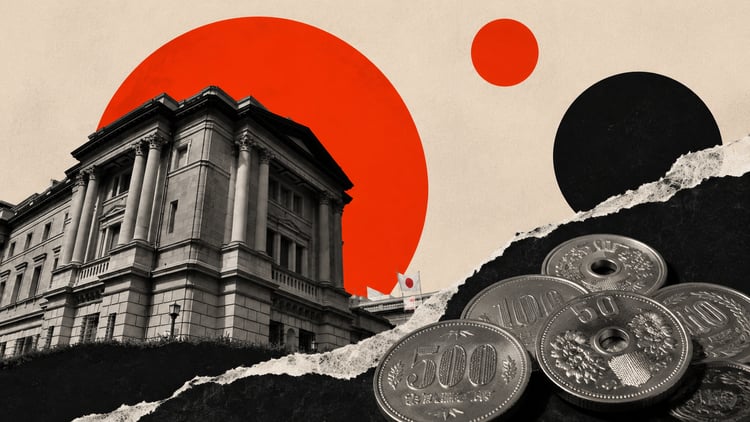
BoJ Deputy Governor Ryozo Himino affirmed earlier on Wednesday that Japan’s underlying inflation is approaching the central bank’s 2% target and that financial conditions are still accommodative, while medium- and long--term inflation expectations continue rising.
These comments have offset the impact of the soft Trade Balance figures seen earlier in the day, reinforcing the view of a quarterly rate-hiking pace. The market anticipates a further quarter-point hike before year-end, most likely at the December 17 meeting.
Dollar path hinges on Fed’s October pause and December hike pricing
The US Dollar, on the other hand, remains on the defensive, as traders brace for a pause at next week's Federal Reserve (Fed) monetary policy meeting. Risk aversion amid Middle East uncertainty and high Oil prices are keeping the Greenback from falling further, but anyway, Dollar bulls remain subdued so far.
Analysts at Commerzbank note that the market has largely shifted its focus away from an imminent move by the Fed, with a hike in December priced in and “a chance that another hike could come by the middle of next year.” A scenario that Commerzbank experts do not fully share.
The bank argues that “if the Fed delivers a hawkish pause next week, the dollar could gain some ground, at least in the short term,” as markets lean into the existing pricing for a December move. Conversely, they caution that any deviation from a restrictive stance "would cause the market to revise its expectations downward, especially for next year", and might put the US Dollar under pressure.
Economic Indicator
Merchandise Trade Balance Total
The Merchandise Trade Balance Total released by the Ministry of Finance is a measure of balance amount between import and export. A positive value shows a trade surplus while a negative value shows a trade deficit. Japan is so much dependant on exports that the Japanese economy heavily relies on a trade surplus. Therefore, any variation in the figures influences the domestic economy. If a steady demand in exchange for Japanese exports is seen, that would turn into a positive.
Read more.Last release: Tue Oct 20, 2026 23:50
Frequency: Monthly
Actual: ¥-536.6B
Consensus: ¥-181B
Previous: ¥-1,105.6B
Source: Ministry of Finance of Japan
Economic Indicator
Exports (YoY)
Exports of goods and services, released by Japan Customs, consist of transactions of goods ans services (sales, barter, gifts or grants) from residents to non-residents.
Read more.Last release: Tue Oct 20, 2026 23:50
Frequency: Monthly
Actual: 16.7%
Consensus: 20.1%
Previous: 19.3%
Source: Ministry of Finance of Japan
Top Articles
1France’s 10-year bond yield climbs above 5% stirring fears of a credit crisis 2Euro: France risks and ECB expectations keep EUR/USD steady – Commerzbank3New Zealand Dollar: RBNZ hike seen with CPI near forecast – ING4Silver price today: Silver falls, according to FXStreet data5British Pound: Inflation surge backs November BoE hike – BBH6GBP/USD Price Forecast: Sees fresh upside leg above 1.34107South African Rand: Gains against US Dollar at risk – Societe Generale8Pi Network Price Forecast: PI defends key support as selling pressure eases9Russian Deputy PM Novak: We may fully restore diesel exports by year-end
LIVE QUOTES


ALL ABOUT FOREX
Margin Call Meaning: What It Is, What Triggers It and How to Avoid One
Top 15 Weakest Currencies in the World
Top 15 Strongest Currencies in the World
Is Forex Trading Halal?
Best Time to Trade Forex
Forex Trading vs Futures Trading
Forex Trading vs Stock Trading
Forex Trading vs Crypto Trading
Is Forex Trading Profitable In 2026?
Get Started!
Sign up and access the Global Markets in less than 3 minutes

Connect With Us









Contacts
Phone: +61 2 8036 8388
Fax: +61 2 8036 8388
Email: support@tmgm.com



The information provided on this website is of a general nature only and does not constitute personal financial advice. Before acting on any information on this website, you should consider the suitability of the information in relation to your objectives, financial situation and needs. Investing in CFDs and FX Margin Contracts carries significant risks and is not suitable for all investors. You may lose more than your initial deposit. You do not own, or have, any interest in the underlying asset. We recommend that you seek independent advice and ensure you fully understand the risks involved before trading. It is important that you read and consider the disclosure document before you acquire any product listed on the website. The information and advertisements offered on this website are not intended for use by any person in any country or jurisdiction where such use would be contrary to local laws and regulations. The Products and Services offered on this website are not intended for residents of the United States, Malaysia and Thailand.
TMGM is authorized and regulated in various jurisdictions.
Trademax Australia Limited, trading as TMGM, is regulated by the Australian Securities and Investments Commission (ASIC), AFSL no. 436416 and is located at Level 28, One International Tower, 100 Barangaroo Avenue, 2000 Sydney, NSW Australia.
Email: support@tmgm.com.au
Trademax Global Limited, trading as TMGM, is authorized and regulated by the Vanuatu Financial Services Commission (VFSC), registration number 40356 and registered at 1276, Kumul Highway, Port Vila, Vanuatu, Republic of Vanuatu.
Email: support@tmgm.com
Trademax Global Markets (SE) Limited, trading as TMGM, is authorized and regulated by the Financial Services Authority (FSA) of Seychelles, with license number SD224. The company is registered at Office No 13, Providence Estate ABIS Centre, Mahe, Seychelles.
Email: support@tmgm.com
Trademax Global Markets (International) Pty Ltd, trading as TMGM, is authorized and regulated by the Financial Services Commission, Mauritius (FSC) with license no. GB22201012, and registered at 33, Edith Cavell Street C/o IQ EQ Fund Services (Mauritius) Ltd Port Louis, 11324 Mauritius.
Email: support@tmgm.com
Copyright © TMGM. All rights reserved