
News & AnalysisCareer

September’s US Federal Reserve (Fed) interest-rate increase, the first in three years and aimed at tackling alarming inflation figures, has revived concerns that reduced liquidity could weigh on Bitcoin (BTC), echoing the 2022 bear market.
Behind those inflation worries are higher Brent Oil prices following the US-Iran war, which began on 28 February. The conflict continues to interrupt shipments through the Strait of Hormuz, with direct consequences for global markets and investor sentiment.
Faced with rising inflation, the Fed is compelled to increase interest rates. This drains market liquidity and dampens demand among consumers and producers alike, reducing investors’ appetite for risk and putting pressure on equities, crypto and other high-risk assets.
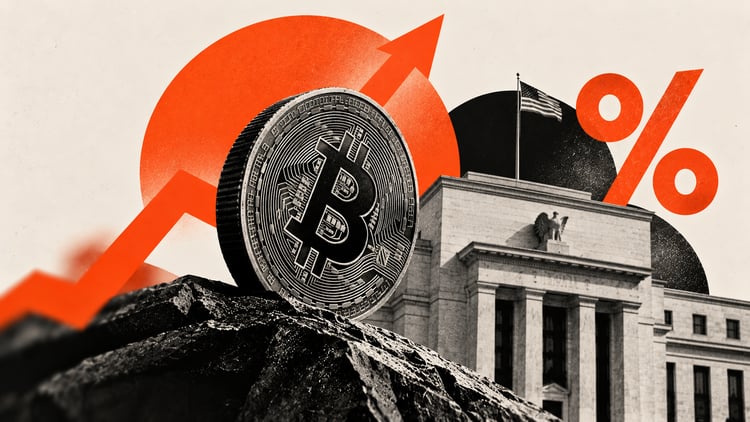
While markets have largely priced in the war, the prospect of further Fed rate increases resembling the 2022 cycle leaves an open question: could Bitcoin enter another bear cycle?
Across the wider market, investors fear a repeat of Bitcoin’s 2022 downturn. During that bear market, Brent Crude Oil climbed above $130 per barrel, prompting a series of Fed increases in the fed funds rate over several months.
September’s US Consumer Price Index (CPI) reached 3.7% YoY, compared with 3.4% in August, as monthly inflation quickened to 0.6%. Against that backdrop, markets grew more nervous when the US Fed was forced to deliver its first interest-rate increase in three years on 16 September. The quarter-point rise took the fed funds rate to a target range of 3.75% to 4.00%.
The Fed subsequently left its benchmark rate on hold on 28 October, although the 10-2 vote implied that more increases lay ahead. Should price pressures persist, financial conditions could remain restrictive, constraining the capital available for speculative assets.
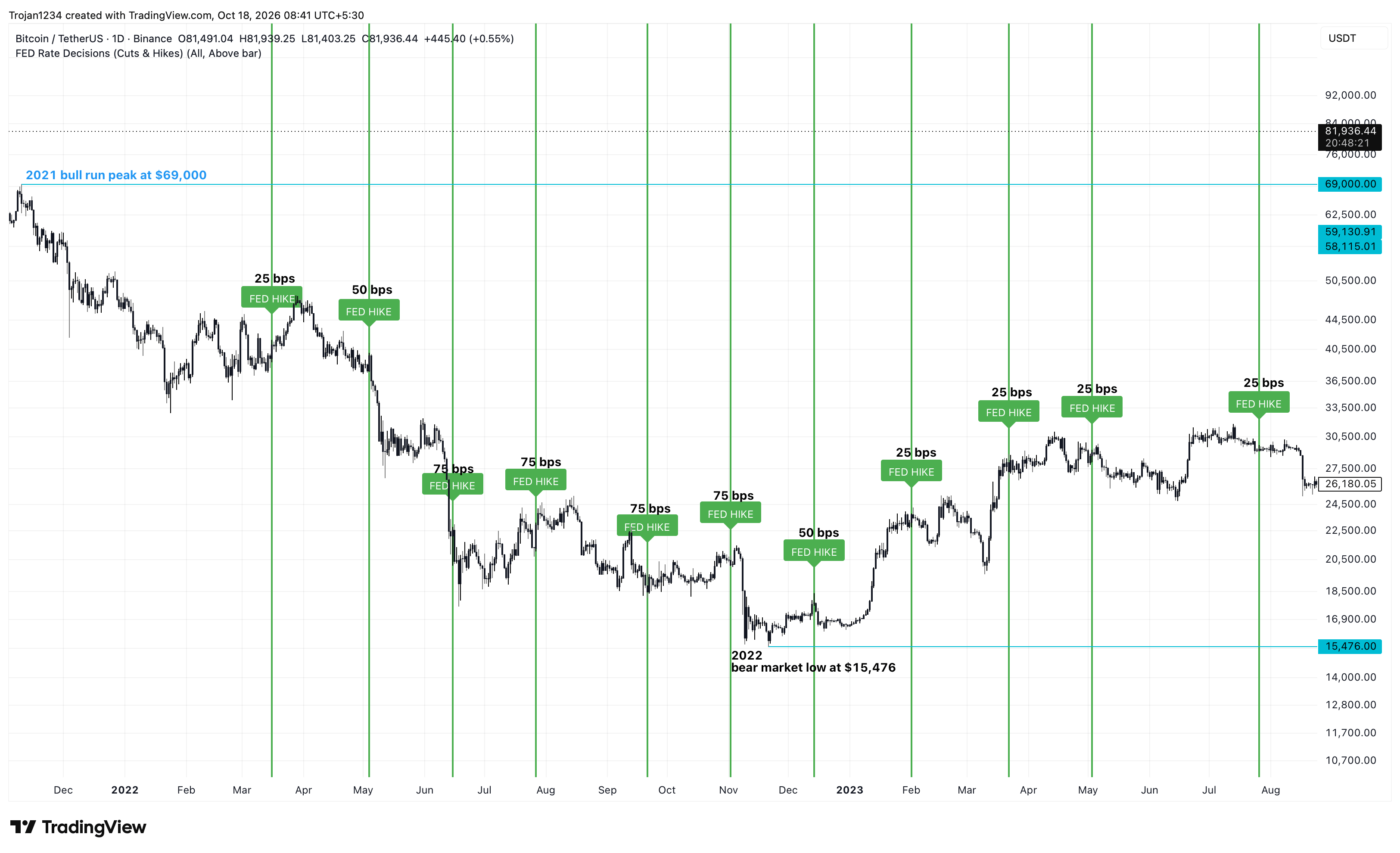
Bitcoin’s experience during the 2022-23 cycle illustrates the complexity of its relationship with rate increases. As the Fed lifted rates from near zero to 4.25%–4.50%, BTC lost nearly 78%, falling from about $69,000 in November 2021 to approximately $15,476 in November 2022.
Monetary tightening gathered pace in 2022 through four successive 75-basis-point increases, with three smaller rises on either side of that sequence. Alongside the collapse of the Terra ecosystem, failures among crypto lenders and the FTX bankruptcy case, those increases added to selling pressure.
During 2023, however, Bitcoin staged a recovery despite further, slower Fed rate increases that ultimately took rates to 5.25%–5.50% in July. That rebound demonstrates that expectations, market positioning and demand can matter more than the immediate effect of higher rates.
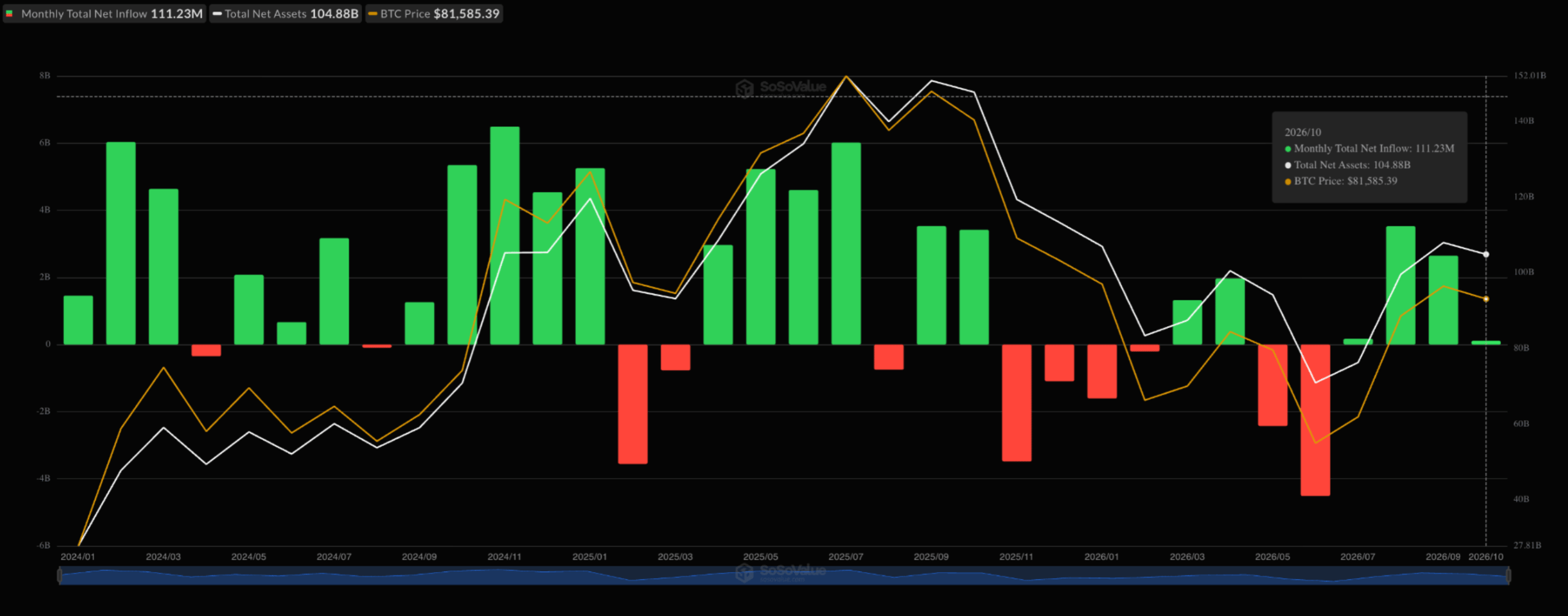
By 2026, Bitcoin’s market structure has changed from that of the 2022 bear market: spot Bitcoin exchange-traded funds (ETFs) and corporate BTC treasuries have become significant sources of institutional demand. As FXStreet previously reported, Bitcoin’s four-year cycle points to a bullish reversal ahead in 2026.
Since their January 2024 launch, US spot Bitcoin ETFs have registered 22 months of inflows and 11 months of outflows as of 28 October, bringing total net flows to $104.9 billion. Bitcoin holdings at private and public companies stand at $103.7 billion and $22.8 billion, respectively. Together, these sizeable ETF and corporate holdings underpin demand, with some purchases funded by issuing equity, taking on debt or selling preferred securities.
A protracted Bitcoin correction could, however, weaken their ability to maintain those holdings. Strategy’s recent sale of some BTC to build cash reserves offers an example. Another round of rate increases could restrict these institutions’ access to liquidity, curbing accumulation or even making their holdings a source of supply.

With the broader market backdrop still uncertain, I spoke exclusively to Dovile Silenskyte, Director of Digital Assets Research at WisdomTree, for FXStreet and asked for his assessment of Bitcoin’s outlook.
The distinguishing feature of this cycle is the route through which demand reaches Bitcoin. Channels through established investment portfolios, company balance sheets and sovereign strategies could now help Bitcoin withstand macroeconomic strains.
Through spot ETFs, investors can gain exposure using familiar market infrastructure. Longer-term strategic demand can come from corporate treasuries, while sovereign holdings could ease potential selling pressure if they are retained. Given Bitcoin’s limited supply, continued purchases and holding through these channels could underpin prices, even with uncertainty over interest rates and geopolitical tensions dampening risk appetite.
Such structural support nevertheless leaves cyclical risks intact. Flows into ETFs may reverse, while corporate purchases still depend on financing conditions. Having a wider investor base creates more possible sources of demand for Bitcoin when sentiment recovers, but it does not establish a price floor.
A market bottom in late 2026 is therefore one possible scenario, rather than a reliable forecast. Institutional adoption [combined] with improving global liquidity provides the stronger argument for a bullish outlook. Falling real yields and easier monetary conditions could allow Bitcoin to benefit both from structural demand and from a more favourable macroeconomic environment.
In the near term, AI investment may vie with Bitcoin for capital, though growth in one need not exclude growth in the other. Funding the AI buildout does not prevent investors from also expanding their Bitcoin exposure.
Financing conditions are the immediate concern. If the supply of debt exceeds investor demand, substantial borrowing for AI infrastructure could raise financing costs. Increased issuance alone, however, does not necessarily tighten financial conditions: the money raised finances investment and flows through the economy. The key questions are whether markets can absorb that debt and whether project returns justify the borrowing.
Further ahead, productivity improvements offer the more substantial opportunity. Efficiency gains from AI that increase output and relieve inflationary pressure could foster a better investment environment, including for Bitcoin. This remains a plausible result, not an assured benefit of AI expenditure.
There are also different foundations to Bitcoin’s investment case. Rather than providing exposure to company earnings or an issuer’s capacity to service debt, it provides exposure to a scarce digital asset. Its attraction consequently reaches beyond the technology spending cycle.
Despite the wider market uncertainty, Bitcoin has remained above key support levels, showing considerable resilience before an entirely bearish assessment is warranted. Institutional demand is the central distinction for Bitcoin in a possible new rate-rise cycle and could underpin its next sustained advance.
Markets nevertheless anticipate a further 25-basis-point increase before the end of 2026, and these funds may struggle to provide support through an extended period of rate rises.
The decisive question, then, is whether Bitcoin’s institutionalisation can weather the next liquidity shock without a return to the severe drawdowns seen in earlier cycles.







Phone: +61 2 8036 8388
Fax: +61 2 8036 8388
Email: support@tmgm.com



The information provided on this website is of a general nature only and does not constitute personal financial advice. Before acting on any information on this website, you should consider the suitability of the information in relation to your objectives, financial situation and needs. Investing in CFDs and FX Margin Contracts carries significant risks and is not suitable for all investors. You may lose more than your initial deposit. You do not own, or have, any interest in the underlying asset. We recommend that you seek independent advice and ensure you fully understand the risks involved before trading. It is important that you read and consider the disclosure document before you acquire any product listed on the website. The information and advertisements offered on this website are not intended for use by any person in any country or jurisdiction where such use would be contrary to local laws and regulations. The Products and Services offered on this website are not intended for residents of the United States, Malaysia and Thailand.
TMGM is authorized and regulated in various jurisdictions.
Trademax Australia Limited, trading as TMGM, is regulated by the Australian Securities and Investments Commission (ASIC), AFSL no. 436416 and is located at Level 28, One International Tower, 100 Barangaroo Avenue, 2000 Sydney, NSW Australia.
Email: support@tmgm.com.au
Trademax Global Limited, trading as TMGM, is authorized and regulated by the Vanuatu Financial Services Commission (VFSC), registration number 40356 and registered at 1276, Kumul Highway, Port Vila, Vanuatu, Republic of Vanuatu.
Email: support@tmgm.com
Trademax Global Markets (SE) Limited, trading as TMGM, is authorized and regulated by the Financial Services Authority (FSA) of Seychelles, with license number SD224. The company is registered at Office No 13, Providence Estate ABIS Centre, Mahe, Seychelles.
Email: support@tmgm.com
Trademax Global Markets (International) Pty Ltd, trading as TMGM, is authorized and regulated by the Financial Services Commission, Mauritius (FSC) with license no. GB22201012, and registered at 33, Edith Cavell Street C/o IQ EQ Fund Services (Mauritius) Ltd Port Louis, 11324 Mauritius.
Email: support@tmgm.com
Copyright © TMGM. All rights reserved


