

Trading
Explore a wide range of markets with competitive pricing, deep liquidity, and advanced trading tools.
Learn More 
Platform
Trade seamlessly with TMGM's powerful platform, built for speed, precision, and a superior trading experience.
Learn More Trading Platform
Academy
Learn the fundamentals of trading with beginner-friendly resources, including guides, webinars, and market insights.
Learn More News & Analysis
Get real-time market updates and expert analysis to stay ahead of trading opportunities
Learn More News & Analysis
About
Learn what sets TMGM apart — our global presence, regulatory strength, and commitment to innovation in trading.
Learn More Why Choose TMGM
Sponsorship
New Zealand Dollar firms on USD weakness despite highest NZ jobless rate in 11 years
- NZD/USD gains 0.19% on Wednesday, supported by a broad decline in the US Dollar following the US midterm elections.
- New Zealand's Unemployment Rate rose to 5.7% in the third quarter, its highest level in 11 years.
- Stronger-than-expected US employment data reinforces expectations of another Fed rate hike in December.
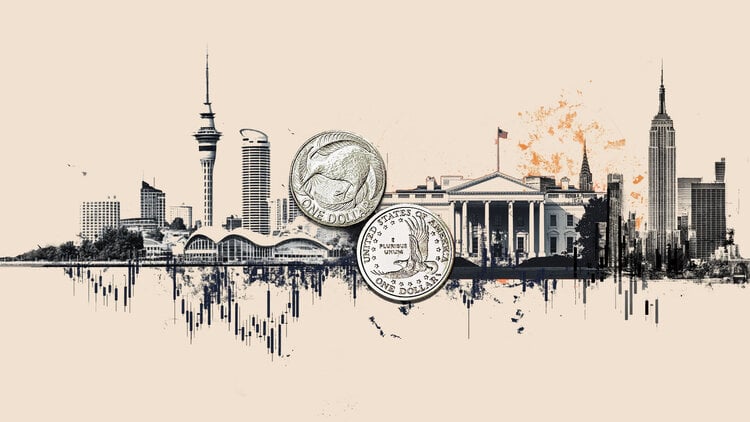
NZD/USD rebounds on Wednesday, trading around 0.5620, up 0.19% on the day at the time of writing. The New Zealand Dollar (NZD) benefits from a broad weakening of the US Dollar (USD) following the US midterm elections, allowing the pair to recover despite disappointing New Zealand employment figures and expectations of further monetary tightening in the United States (US).
The US Dollar comes under pressure after Democrats secure control of both chambers of Congress, dealing a political setback to US President Donald Trump. The election results raise the prospect of legislative gridlock in Washington, as the administration will now need Democratic support to advance its fiscal and economic agenda.
This political uncertainty weighs on the Greenback, while declining US Treasury yields add to selling pressure. The US Dollar Index (DXY), which measures the currency against a basket of six major peers, falls around 0.35% on Wednesday, trading near 101.50 after reaching its lowest level since September 30 at 101.21.
However, the New Zealand Dollar faces domestic headwinds following the release of weaker-than-expected labor market figures. According to Statistics New Zealand, the unemployment rate rose to 5.7% in the third quarter, compared with 5.6% in the previous quarter and market expectations of 5.5%. This represents the highest unemployment level in 11 years. Meanwhile, Employment Change contracted 0.1% QoQ during the quarter, compared with expectations of a 0.4% increase and a 0.5% rise in the second quarter.
These disappointing figures reinforce the cautious monetary policy outlook for the Reserve Bank of New Zealand (RBNZ), which surprised markets last week by keeping interest rates unchanged. The deterioration in employment conditions could limit the central bank's ability to adopt a more restrictive stance, potentially weighing on the Kiwi despite the current weakness of the US Dollar.
On the US side, recent economic indicators continue to support expectations of further interest rate hikes by the Federal Reserve (Fed). The ADP Employment Change report showed that private-sector employers added 86K jobs in October, exceeding market forecasts of 69K. September's figure is revised slightly lower to 86K from 90K. Meanwhile, the Institute for Supply Management (ISM) Services Purchasing Managers Index (PMI) declined to 54.5 in October from 54.9 in September, slightly below expectations of 54.8. Nevertheless, the indicator remained comfortably above the 50 threshold separating expansion from contraction, suggesting continued resilience in the US services sector.
Against this backdrop, persistent inflation risks, particularly those linked to elevated energy prices amid tensions in the Middle East, continue to support expectations of additional monetary tightening. According to the CME FedWatch tool, markets assign an 81% chance to another Fed interest rate hike in December.
The divergence between the monetary policy outlooks of the Fed and the RBNZ could therefore limit the NZD/USD recovery, even as political uncertainty in Washington continues to undermine the US Dollar.
Investors now turn their attention to Thursday's US Initial Jobless Claims and Friday's Nonfarm Payrolls (NFP) report. These releases could provide further indications of the strength of the US labor market and influence expectations surrounding the Fed's next monetary policy decision.
New Zealand Dollar Price Today
The table below shows the percentage change of New Zealand Dollar (NZD) against listed major currencies today. New Zealand Dollar was the strongest against the US Dollar.
| USD | EUR | GBP | JPY | CAD | AUD | NZD | CHF | |
|---|---|---|---|---|---|---|---|---|
| USD | -0.24% | -0.32% | -0.17% | -0.25% | -0.64% | -0.17% | -0.43% | |
| EUR | 0.24% | -0.08% | 0.07% | -0.03% | -0.42% | 0.06% | -0.19% | |
| GBP | 0.32% | 0.08% | 0.15% | 0.08% | -0.33% | 0.14% | -0.12% | |
| JPY | 0.17% | -0.07% | -0.15% | -0.06% | -0.46% | -0.01% | -0.25% | |
| CAD | 0.25% | 0.03% | -0.08% | 0.06% | -0.40% | 0.06% | -0.19% | |
| AUD | 0.64% | 0.42% | 0.33% | 0.46% | 0.40% | 0.46% | 0.21% | |
| NZD | 0.17% | -0.06% | -0.14% | 0.00% | -0.06% | -0.46% | -0.24% | |
| CHF | 0.43% | 0.19% | 0.12% | 0.25% | 0.19% | -0.21% | 0.24% |
The heat map shows percentage changes of major currencies against each other. The base currency is picked from the left column, while the quote currency is picked from the top row. For example, if you pick the New Zealand Dollar from the left column and move along the horizontal line to the US Dollar, the percentage change displayed in the box will represent NZD (base)/USD (quote).
Top Articles
1Forex Today: US jobs data in the limelight amid Midterms hangover2Euro: ECB rate hike bets support gains against US Dollar - Scotiabank3Silver Price Forecast: RSI recovery puts $55 resistance in play4Gold reclaims $4,000 as US midterm sweep sinks USD, Oil plunges5WTI plunges 9% as US election results raise hopes of an end to Iran war6New Zealand Dollar firms on USD weakness despite highest NZ jobless rate in 11 years7Bitcoin and Gold Outlook: BTC tops $80K, XAU reclaims $4,000 as Democrats take control of Congress8Australian Dollar recovers as US election fallout overshadows dovish RBA signals9Euro area: Core inflation risks rising – Commerzbank


Get Started!
Sign up and access the Global Markets in less than 3 minutes

Connect With Us









Contacts
Phone: +61 2 8036 8388
Fax: +61 2 8036 8388
Email: support@tmgm.com



The information provided on this website is of a general nature only and does not constitute personal financial advice. Before acting on any information on this website, you should consider the suitability of the information in relation to your objectives, financial situation and needs. Investing in CFDs and FX Margin Contracts carries significant risks and is not suitable for all investors. You may lose more than your initial deposit. You do not own, or have, any interest in the underlying asset. We recommend that you seek independent advice and ensure you fully understand the risks involved before trading. It is important that you read and consider the disclosure document before you acquire any product listed on the website. The information and advertisements offered on this website are not intended for use by any person in any country or jurisdiction where such use would be contrary to local laws and regulations. The Products and Services offered on this website are not intended for residents of the United States, Malaysia and Thailand.
TMGM is authorized and regulated in various jurisdictions.
Trademax Australia Limited, trading as TMGM, is regulated by the Australian Securities and Investments Commission (ASIC), AFSL no. 436416 and is located at Level 28, One International Tower, 100 Barangaroo Avenue, 2000 Sydney, NSW Australia.
Email: support@tmgm.com.au
Trademax Global Limited, trading as TMGM, is authorized and regulated by the Vanuatu Financial Services Commission (VFSC), registration number 40356 and registered at 1276, Kumul Highway, Port Vila, Vanuatu, Republic of Vanuatu.
Email: support@tmgm.com
Trademax Global Markets (SE) Limited, trading as TMGM, is authorized and regulated by the Financial Services Authority (FSA) of Seychelles, with license number SD224. The company is registered at Office No 13, Providence Estate ABIS Centre, Mahe, Seychelles.
Email: support@tmgm.com
Trademax Global Markets (International) Pty Ltd, trading as TMGM, is authorized and regulated by the Financial Services Commission, Mauritius (FSC) with license no. GB22201012, and registered at 33, Edith Cavell Street C/o IQ EQ Fund Services (Mauritius) Ltd Port Louis, 11324 Mauritius.
Email: support@tmgm.com
Copyright © TMGM. All rights reserved