

Trading
Explore a wide range of markets with competitive pricing, deep liquidity, and advanced trading tools.
Learn More 
Platform
Trade seamlessly with TMGM's powerful platform, built for speed, precision, and a superior trading experience.
Learn More Trading Platform
Academy
Learn the fundamentals of trading with beginner-friendly resources, including guides, webinars, and market insights.
Learn More News & Analysis
Get real-time market updates and expert analysis to stay ahead of trading opportunities
Learn More News & Analysis
About
Learn what sets TMGM apart — our global presence, regulatory strength, and commitment to innovation in trading.
Learn More Why Choose TMGM
Sponsorship
Japanese Yen trims gains as investors assess scope for BoJ tightening
- 159.00 regained: USD/JPY rebounds from Friday’s lows of 158.40.
- Below-forecast Japanese inflation raises questions over the extent of further BoJ monetary tightening.
- Reduced expectations for a large Fed rate increase in December limit further Yen losses.
159.00 is back below USD/JPY in early European trading on Monday. Having recovered from last Friday’s lows of 158.40, the pair is approaching the key 160.00 level. The Japanese Yen (JPY) is surrendering Friday’s gains against the US Dollar (USD), with investors assessing how far the Bank of Japan’s (BoJ) tightening cycle can run after last week’s weaker-than-expected Japanese inflation figures.
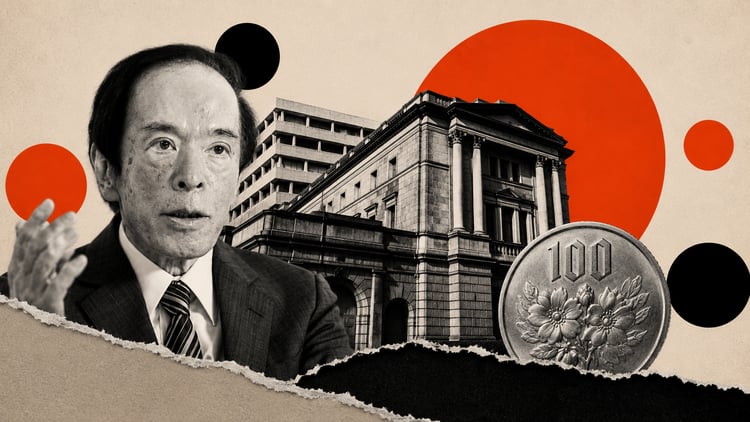
October marked the second consecutive acceleration in Japanese consumer inflation above the BoJ’s 2% target, according to last week’s data. Core CPI, however, missed market forecasts. The figures followed Q3 Gross Domestic Product (GDP) data published one week earlier, which showed an unexpected contraction. That outcome may have influenced the BoJ’s monetary policy committee.
December BoJ rate hike expectations retreat
Markets have reduced the implied probability of a December BoJ “25bps rate increase to 77% from 87%.” Elias Haddad of Brown Brothers Harriman attributes the shift to the “downside CPI surprise”. BBH nevertheless emphasises that “inflation above the 2% target keeps a December hike on track,” adding that “contained underlying price pressure continues to argue for a gradual tightening cycle.”
Further Yen weakness is being limited by a struggling US Dollar on Monday. Expectations of an aggressive Federal Reserve rate increase in December are fading.
Citing the recent equity market sell-off, US Treasury Secretary Scott Bessent cautioned on Sunday that excessive Federal Reserve tightening could put the economy at risk. His warning has left markets favouring a more gradual pace of monetary tightening over the coming months.
On the economic calendar, US Flash PMIs are forecast to indicate continued solid expansion in November. Attention will also centre on Wednesday’s Personal Consumption Expenditures (PCE) Price Index release. The figures are expected to indicate persistently high inflation, increasing pressure on the central bank to raise borrowing costs.
Central banks: key questions
Maintaining price stability within a country or region is a central bank’s core mandate. As the prices of goods and services fluctuate, economies continually face inflation or deflation. Persistent increases in the prices of the same goods constitute inflation; persistent declines constitute deflation. By adjusting its policy rate, a central bank seeks to keep demand in check. For major central banks, including the US Federal Reserve (Fed), the European Central Bank (ECB) and the Bank of England (BoE), the mandate is to maintain inflation close to 2%.
Adjusting the benchmark policy rate, commonly called the interest rate, is a central bank’s main tool for raising or lowering inflation. At pre-announced times, it releases a statement setting out the rate and explaining why it has been held, cut or increased. Domestic banks then revise their savings and lending rates accordingly. Those changes affect how easily savers can earn a return and companies can borrow to invest in their businesses. Substantial interest rate increases are known as monetary tightening. Reductions in the benchmark rate are termed monetary easing.
Political independence is common among central banks. Before taking a seat on a central bank’s policy board, candidates go through a series of panels and hearings. Board members typically hold distinct views on controlling inflation and the monetary policy needed to achieve that. Those favouring very loose policy, low rates and cheap credit to deliver a substantial economic boost, while accepting inflation slightly above 2%, are known as ‘doves’. By contrast, ‘hawks’ favour higher rates to reward saving and seek to contain inflation at all times. They remain focused on bringing inflation to, or just below, 2%.
A chairman or president usually chairs each meeting and works to build agreement between hawks and doves. If votes are evenly divided over whether to adjust policy, the head has the final say to prevent a 50-50 tie. Speeches by the chairman, often available live, communicate the current policy stance and outlook. Central banks aim to advance monetary policy without causing sharp swings in interest rates, equities or their currency. Ahead of a policy meeting, all members signal their views to markets. Public comments are prohibited from a few days before the meeting until the new policy is announced. This interval is known as the blackout period.
POPULAR ARTICLES
1Swiss Franc: SNB stance signals upside against Euro – ING2Australian Dollar: Decline against US Dollar looks overextended, says UOB3US Dollar rebound trims Australian Dollar’s early gains4Bitcoin, Ethereum, XRP advance despite persistently fragile sentiment: Crypto today5Euro: ECB hikes backed by resilient data – BBH6Over 2% rise in gold as half-point Fed hike bets recede; US PCE in focus7Japanese Yen trims gains as investors assess scope for BoJ tightening8Soft UK Flash PMIs: British Pound retreats from session highs9Federal Reserve: Sticky inflation and back-to-back rate hikes – TD Securities


Get Started!
Sign up and access the Global Markets in less than 3 minutes

Connect With Us









Contacts
Phone: +61 2 8036 8388
Fax: +61 2 8036 8388
Email: support@tmgm.com



The information provided on this website is of a general nature only and does not constitute personal financial advice. Before acting on any information on this website, you should consider the suitability of the information in relation to your objectives, financial situation and needs. Investing in CFDs and FX Margin Contracts carries significant risks and is not suitable for all investors. You may lose more than your initial deposit. You do not own, or have, any interest in the underlying asset. We recommend that you seek independent advice and ensure you fully understand the risks involved before trading. It is important that you read and consider the disclosure document before you acquire any product listed on the website. The information and advertisements offered on this website are not intended for use by any person in any country or jurisdiction where such use would be contrary to local laws and regulations. The Products and Services offered on this website are not intended for residents of the United States, Malaysia and Thailand.
TMGM is authorized and regulated in various jurisdictions.
Trademax Australia Limited, trading as TMGM, is regulated by the Australian Securities and Investments Commission (ASIC), AFSL no. 436416 and is located at Level 28, One International Tower, 100 Barangaroo Avenue, 2000 Sydney, NSW Australia.
Email: support@tmgm.com.au
Trademax Global Limited, trading as TMGM, is authorized and regulated by the Vanuatu Financial Services Commission (VFSC), registration number 40356 and registered at 1276, Kumul Highway, Port Vila, Vanuatu, Republic of Vanuatu.
Email: support@tmgm.com
Trademax Global Markets (SE) Limited, trading as TMGM, is authorized and regulated by the Financial Services Authority (FSA) of Seychelles, with license number SD224. The company is registered at Office No 13, Providence Estate ABIS Centre, Mahe, Seychelles.
Email: support@tmgm.com
Trademax Global Markets (International) Pty Ltd, trading as TMGM, is authorized and regulated by the Financial Services Commission, Mauritius (FSC) with license no. GB22201012, and registered at 33, Edith Cavell Street C/o IQ EQ Fund Services (Mauritius) Ltd Port Louis, 11324 Mauritius.
Email: support@tmgm.com
Copyright © TMGM. All rights reserved