

Сауда
Бәсекеге қабілетті бағалар, жоғары өтімділік және озық сауда құралдары арқылы нарықтардың кең ауқымын зерттеңіз.
Толығырақ 
Платформа
TMGM-нің жылдамдыққа, дәлдікке және жоғары деңгейлі сауда тәжірибесіне арналған қуатты платформасымен сауданы кедергісіз жүргізіңіз.
Толығырақ Сауда платформасы
Академия
Бастауыштарға арналған нұсқаулықтар, вебинарлар және нарық талдаулары сияқты ресурстар арқылы сауданың негіздерін үйреніңіз.
Толығырақ TMGM Академиясы
Жаңалықтар және талдау
Сауда мүмкіндіктерінен алда болу үшін нақты уақыттағы нарық жаңартулары мен сараптамалық талдауды алыңыз
Толығырақ Жаңалықтар және талдау
Туралы
TMGM-ді ерекшелендіретін жайттарды біліңіз — біздің жаһандық ауқымымыз, реттеушілік беріктігіміз және трейдингтегі инновацияларға деген адалдығымыз.
Толығырақ Неліктен TMGM-ді таңдау керек
ECB recap: On hold amid tighter financial conditions and rising energy costs
The European Central Bank (ECB) unanimously left its three key interest rates unchanged, keeping the deposit rate at 2.50%, as policymakers assessed the impact of renewed energy-price increases. President Christine Lagarde said the Governing Council had debated whether a hike was appropriate but concluded that a measured approach remained justified for now.
The ECB acknowledged that energy prices had risen beyond its baseline assumptions, creating upside risks to inflation and downside risks to growth. Headline inflation is likely to remain well above target over the coming quarters, although the ECB expects it to decline later as energy inflation eases. Underlying inflation has remained broadly stable, wages have not shown a material second-round response and longer-term expectations remain close to 2%.

Lagarde said early pricing-chain data pointed to renewed upward pressure, while the ECB’s wage tracker indicates negotiated wage growth of 2.5%-2.8% in the remaining months of 2026. The central bank is seeing more indirect effects from the energy shock, but no additional second-round effects beyond those already incorporated into its projections.
The growth outlook remains mixed. Incoming data suggest the economy expanded in the third quarter, with AI investment, government spending and a potential recovery in exports supporting activity. However, higher energy prices, rising financing costs, weaker confidence, fiscal uncertainty and tighter financial conditions are all weighing on demand. The risks to growth are tilted to the downside, while inflation risks remain tilted higher.
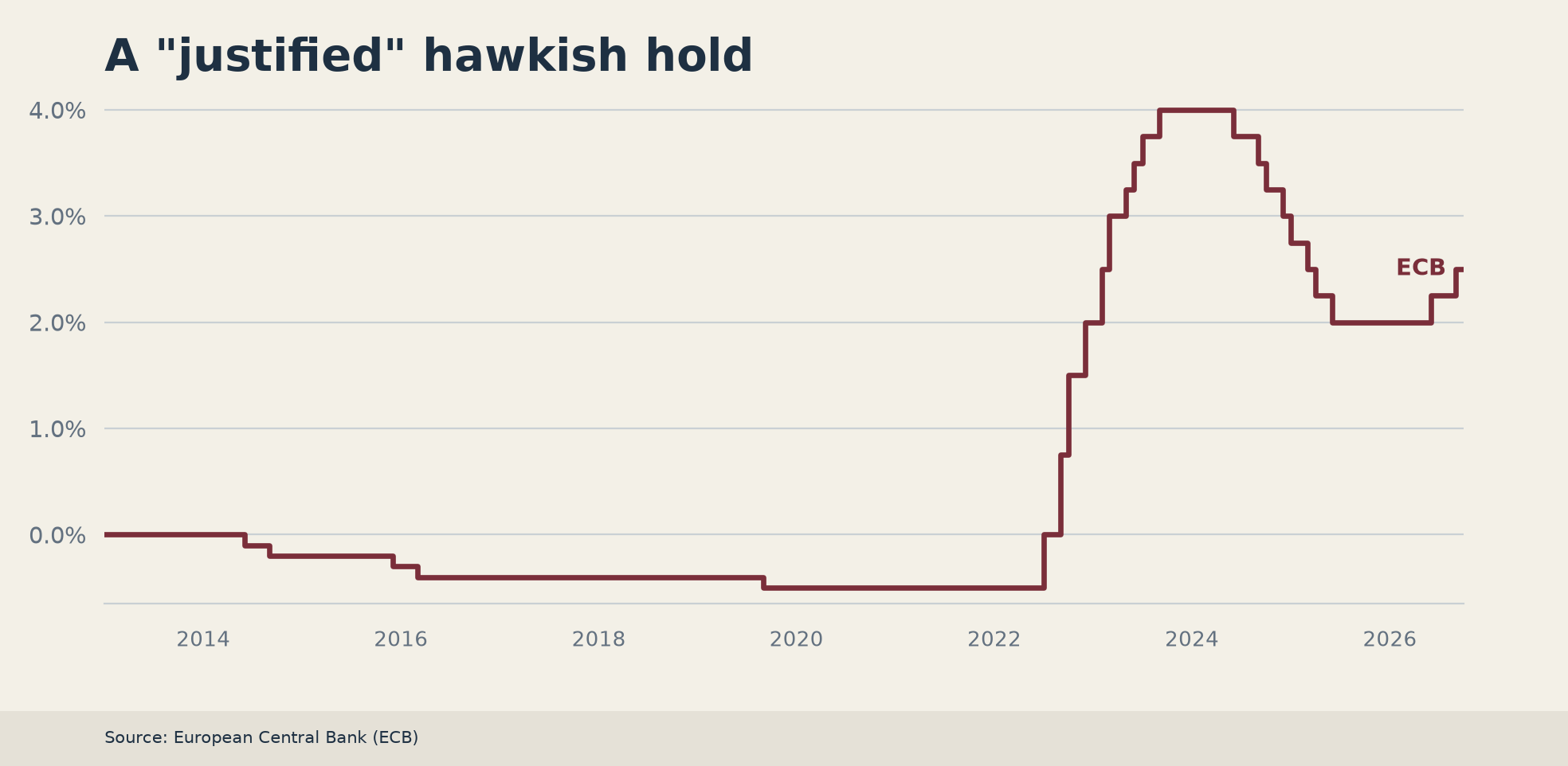
Overall, the decision was a cautious and slightly hawkish hold. The Governing Council has not pre-committed to a rate path, but the decision will be guided closely by underlying inflation and the transmission of monetary policy. Lagarde described the six-week period before the next meeting as information-rich, suggesting that December’s decision will depend heavily on whether energy pressures broaden or remain contained.
Үздік мақалалар
1Philippine Peso: Official jawboning slows depreciation – OCBC2HYPE soars 17% as ICE, Druckenmiller invest in tradeXYZ for US expansion3ECB recap: On hold amid tighter financial conditions and rising energy costs4Thai Baht: Oil risks point to weakness against US Dollar - MUFG5Singapore Dollar: Holds range against US Dollar as momentum fades - UOB6Forex Today: BoJ to leave rates unchanged7Japanese Yen struggles for direction as BoJ interest rate decision looms8Indonesian Rupiah: MSCI risks deepen pressure against US Dollar - OCBC9Gold falls near $4,000 as strong US GDP fuels Fed hike outlook


Бастау!
Тіркеліп, 3 минуттан аз уақытта жаһандық нарықтарға қол жеткізіңіз

Бізбен байланысыңыз









Байланыстар
Телефон: +61 2 8036 8388
Факс: +61 2 8036 8388
Эл. пошта: support@tmgm.com



Осы веб-сайтта берілген ақпарат тек жалпы сипатта ғана ұсынылады және жеке қаржылық кеңес болып табылмайды. Осы веб-сайттағы кез келген ақпаратқа сүйенбес бұрын, оның сіздің мақсаттарыңызға, қаржылық жағдайыңызға және қажеттіліктеріңізге сәйкестігін бағалауыңыз керек. CFD және FX Margin Contracts-қа инвестиция салу елеулі тәуекелдермен байланысты және барлық инвесторлар үшін қолайлы емес. Сіз бастапқы салымыңыздан артық қаражат жоғалтуыңыз мүмкін. Сіз базалық активке ешқандай меншік құқығына немесе үлеске ие болмайсыз. Сауда жасамас бұрын тәуелсіз кеңес алуды және тәуекелдерді толық түсінуді ұсынамыз. Веб-сайтта көрсетілген кез келген өнімді сатып алмас бұрын, ақпараттық құжатты оқып, оны мұқият қарастыру маңызды. Осы веб-сайтта ұсынылған ақпарат пен жарнамалар жергілікті заңдар мен ережелерге қайшы келетін кез келген елде немесе юрисдикцияда тұратын адамдардың пайдалануына арналмаған. Осы веб-сайтта ұсынылатын Өнімдер мен Қызметтер Америка Құрама Штаттары, Малайзия және Таиланд тұрғындарына арналмаған.
TMGM әртүрлі юрисдикцияларда уәкілетті және реттеледі.
Trademax Australia Limited, TMGM атауымен жұмыс істейді, Австралияның Бағалы қағаздар және инвестициялар жөніндегі комиссиясымен (ASIC) реттеледі, AFSL № 436416 және мына мекенжайда орналасқан: Level 28, One International Tower, 100 Barangaroo Avenue, 2000 Sydney, NSW Australia.
Электрондық пошта: support@tmgm.com.au
Trademax Global Limited, TMGM атауымен жұмыс істейді, Вануату Қаржылық қызметтер комиссиясымен (VFSC) уәкілетті және реттеледі, тіркеу нөмірі 40356, тіркелген мекенжайы: 1276, Kumul Highway, Port Vila, Vanuatu, Republic of Vanuatu.
Электрондық пошта: support@tmgm.com
Trademax Global Markets (SE) Limited, TMGM атауымен жұмыс істейді, Сейшел аралдарының Қаржылық қызметтер басқармасы (FSA) тарапынан уәкілетті және реттеледі, лицензия нөмірі SD224. Компания мына мекенжайда тіркелген: Office No 13, Providence Estate ABIS Centre, Mahe, Seychelles.
Электрондық пошта: support@tmgm.com
Trademax Global Markets (International) Pty Ltd, TMGM атауымен жұмыс істейді, Mauritius Қаржылық қызметтер комиссиясымен (FSC) № GB22201012 лицензиясы бойынша уәкілетті және реттеледі, тіркелген мекенжайы: 33, Edith Cavell Street C/o IQ EQ Fund Services (Mauritius) Ltd Port Louis, 11324 Mauritius.
Электрондық пошта: support@tmgm.com
Авторлық құқық © TMGM. Барлық құқықтар қорғалған