


Crypto Today: Bitcoin, Ethereum, XRP extend recovery despite ETFs outflows
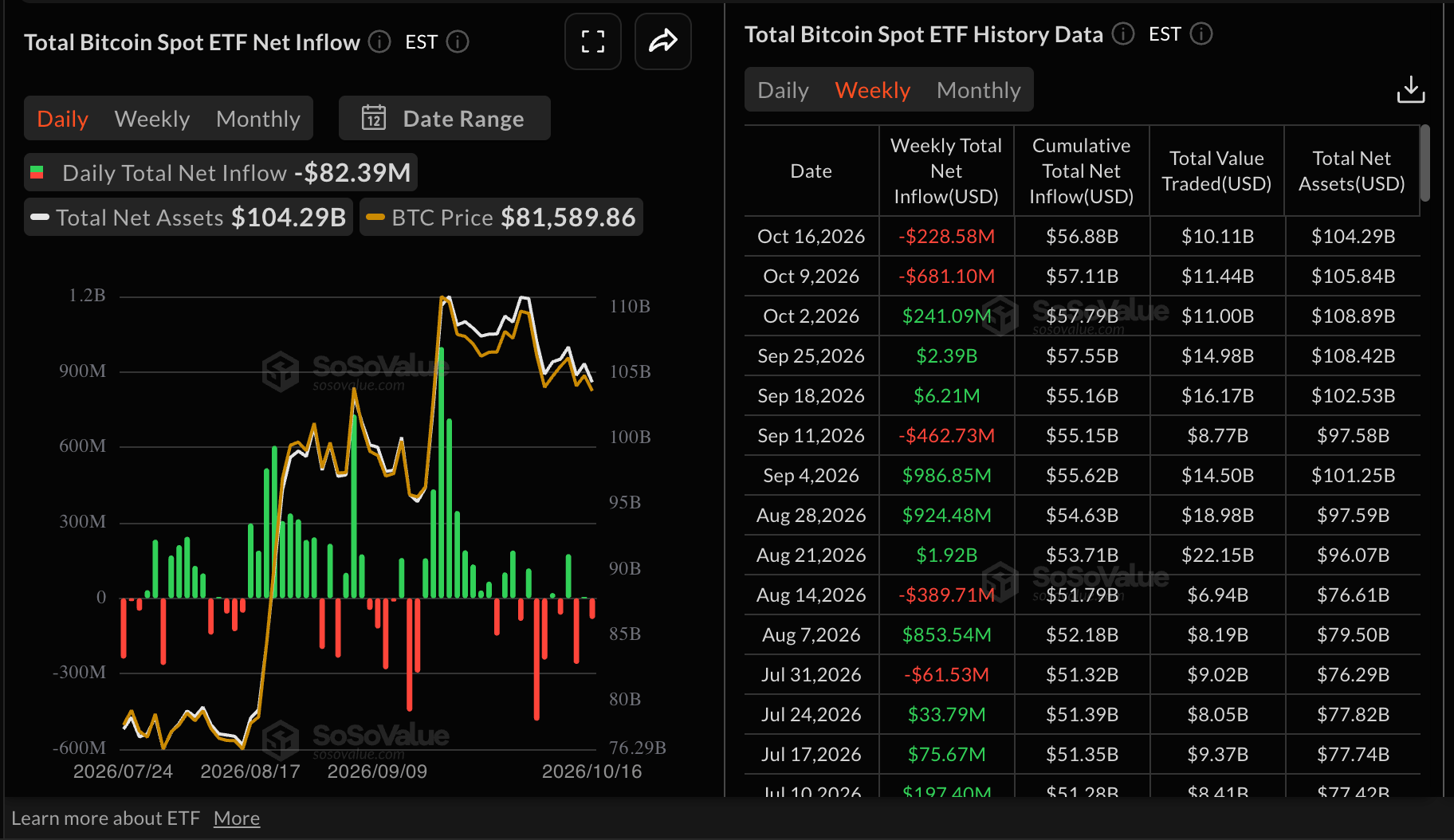
- Bitcoin edges higher above $82,000, building strong structural support despite roughly $229 million in ETF outflows last week.
- Ethereum recovers above $2,400 as bulls strive to regain trend control, backed by a subtle recovery in momentum indicators.
- XRP has reclaimed $1.30 immediate support despite renewed weekly ETF outflows, while moving averages limit upside.
Cryptocurrencies are broadly and gradually recovering on Monday, with Bitcoin (BTC) gaining ground above $82,000. The largest crypto by market capitalization recently tapped robust support near $82,000, prompting buy-the-dip opportunities and a renewed recovery outlook.

Ethereum (ETH) is edging higher above $2,400 as bulls push to regain control over the trend. With short-term support structure in place, the path of least resistance could stay upward, as bulls eye another move toward $2,600.
Ripple (XRP), meanwhile, hovers above the key $1.30 support, which has recently been reclaimed following last week’s macro-driven sell-off. Still, the remittance token must sustain the recovery above the key moving average resistance cluster to retain buyer interest.
Capital outflows weigh on crypto market sentiment
Major cryptocurrencies continued to face fading investor interest last week, with Bitcoin spot Exchange-Traded Funds (ETFs) posting $229 million in outflows through Friday.
The outflows were driven primarily by macroeconomic headwinds as investors appeared to reassess their risk exposure after the Consumer Price Index (CPI) report showed inflation pressures in the United States remained elevated.
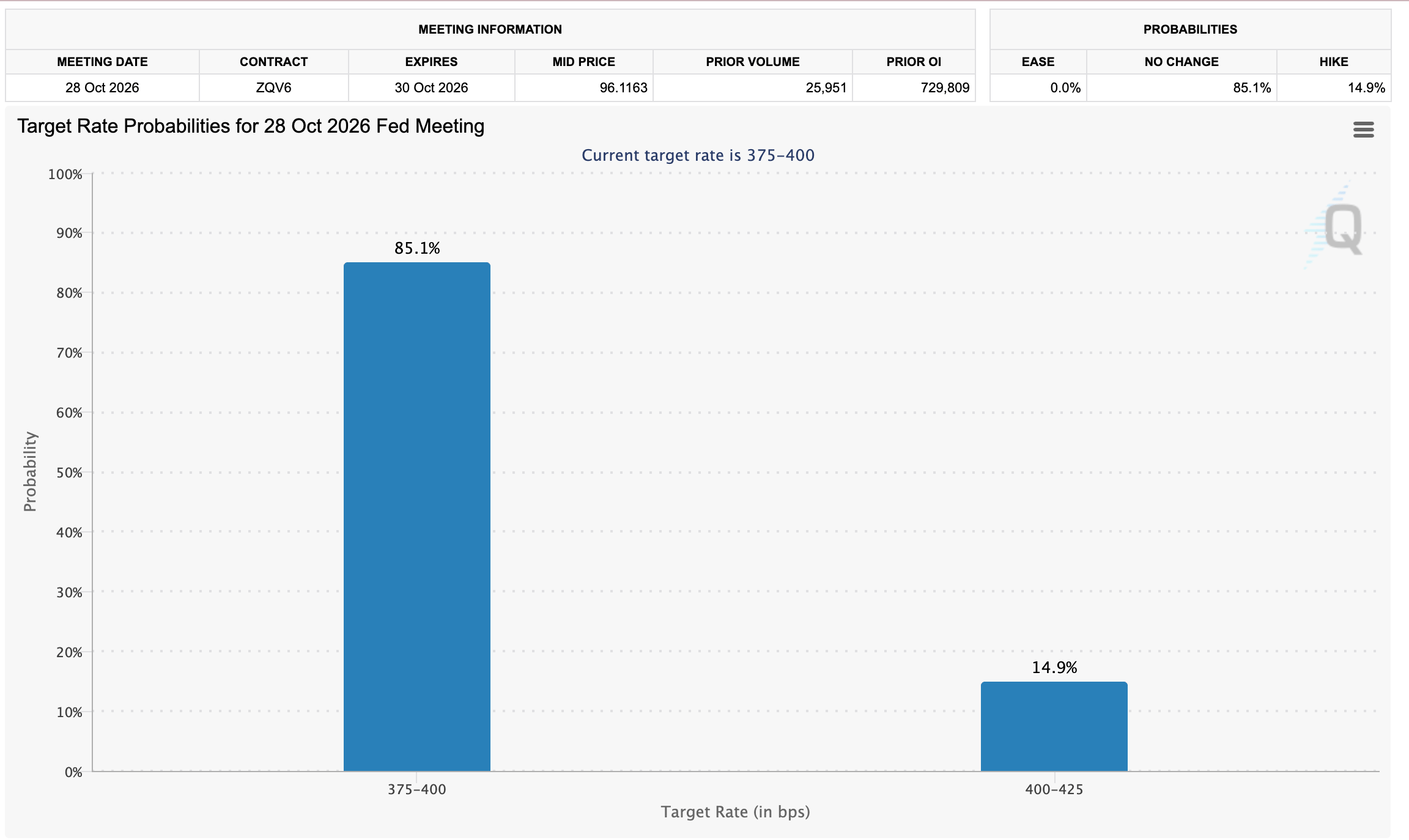
Market participants are currently pricing in an 85% probability that the Federal Reserve (Fed) will hold interest rates in the 3.75-4.00% range at next week's monetary policy meeting. Despite this outlook, US inflation runs above the long-term 2% target, raising the odds of a December rate hike.
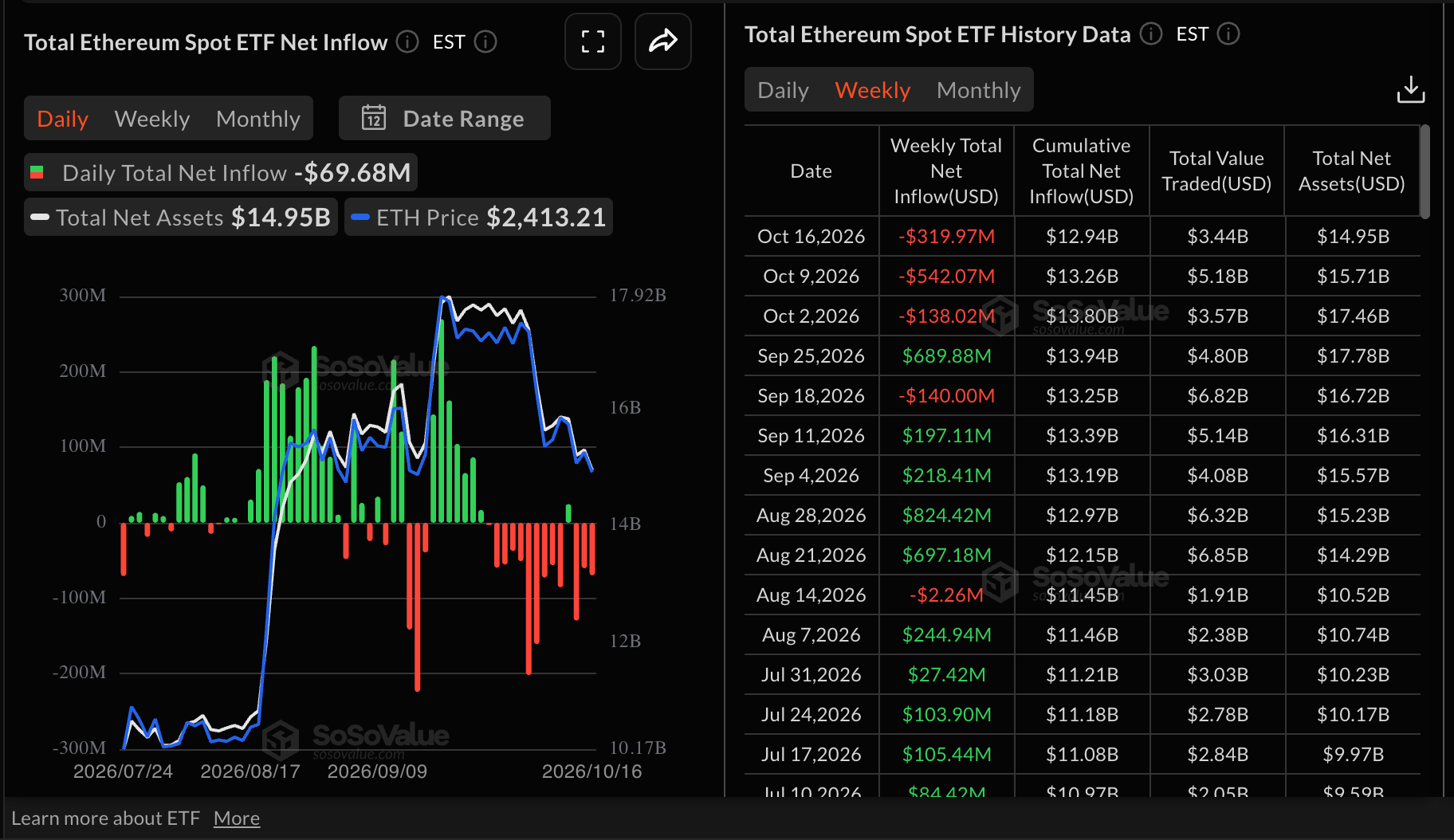
Ethereum spot ETFs logged the third straight bearish week, with roughly $320 million in outflows through Friday. The steady outflow trend aligns with recent concerns about the macro environment and sticky geopolitical tensions in the Middle East, as Oil and energy prices remain high. Nonetheless, cumulative inflows remain positive at $12.9 billion, with net assets at approximately $15 billion, underscoring investors' long-term positive outlook on Ethereum.
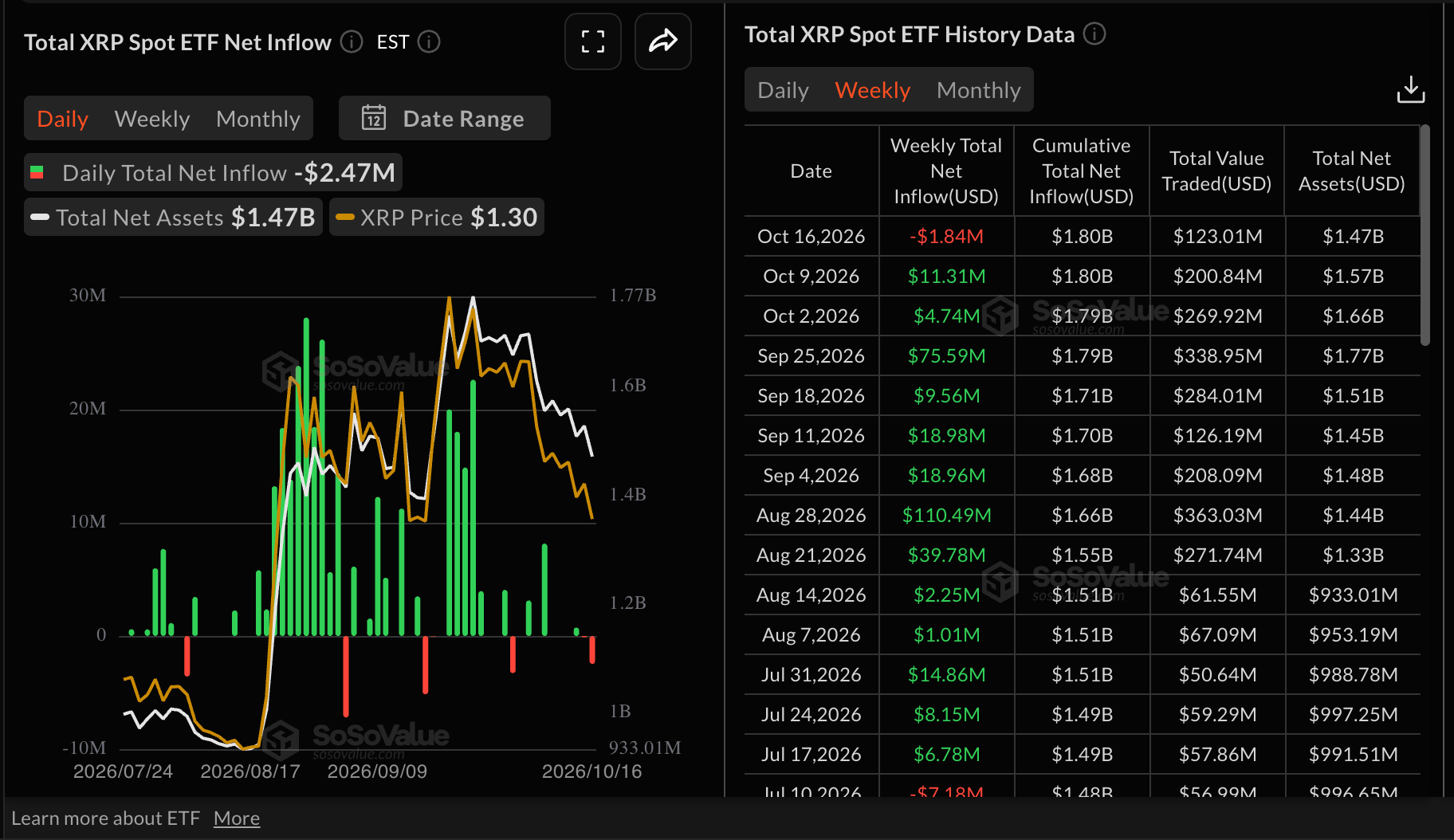
XRP spot ETFs, on the other hand, recorded $1.8 million in outflows last week, breaking a robust 13-week bullish streak. That said, this shift in flows alone is not enough to confirm a bearish trend. Therefore, this week’s outlook will provide more insight into the direction XRP spot ETFs will take. ETF inflows help cushion the token against headwinds and reinforce a bullish outlook.
Technical analysis: Bitcoin recovery builds momentum
Bitcoin trades at $82,940, holding well above the 50-day, 100-day and 200-day Exponential Moving Averages (EMAs) at $80,625, $77,128 and $75,968, respectively, keeping the broader bias constructive despite the latest consolidation.
The SuperTrend line at $79,664 adds another layer of underlying demand, while the Relative Strength Index (RSI) near 52 suggests neutral momentum and the Moving Average Convergence Divergence (MACD) remains in negative territory, hinting that upside progress is steady but not aggressive.
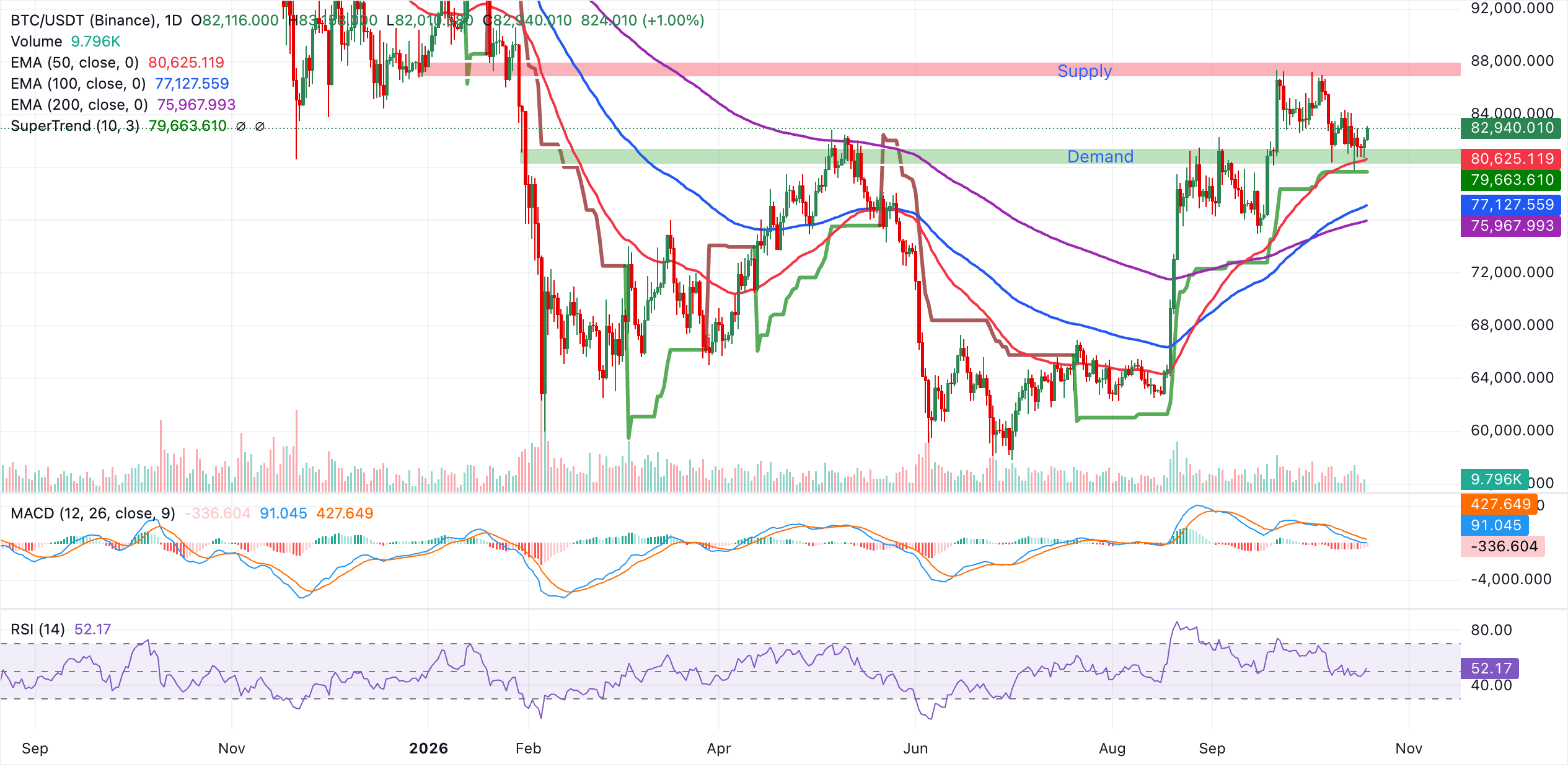
On the downside, initial support lies at the 50-day EMA around $80,625, ahead of the SuperTrend area near $79,664. A deeper pullback would expose the 100-day EMA at $77,128, with the 200-day EMA at $75,968 expected to act as a more substantial medium-term floor as long as buyers defend the broader uptrend.
Altcoins technical outlook: Ethereum and XRP bulls stage a subtle comeback
Ethereum trades at $2,436, consolidating between underlying moving average support and nearby overhead resistance. Price holds above the 100-day and 200-day EMAs, currently around $2,360 and $2,311, suggesting the broader uptrend structure remains intact, yet it remains capped below the 50-day EMA at roughly $2,484 and the SuperTrend line near $2,676.
The MACD stays in negative territory with a widening downside bias, while the RSI hovers near 41, hinting that recovery attempts remain fragile for now.
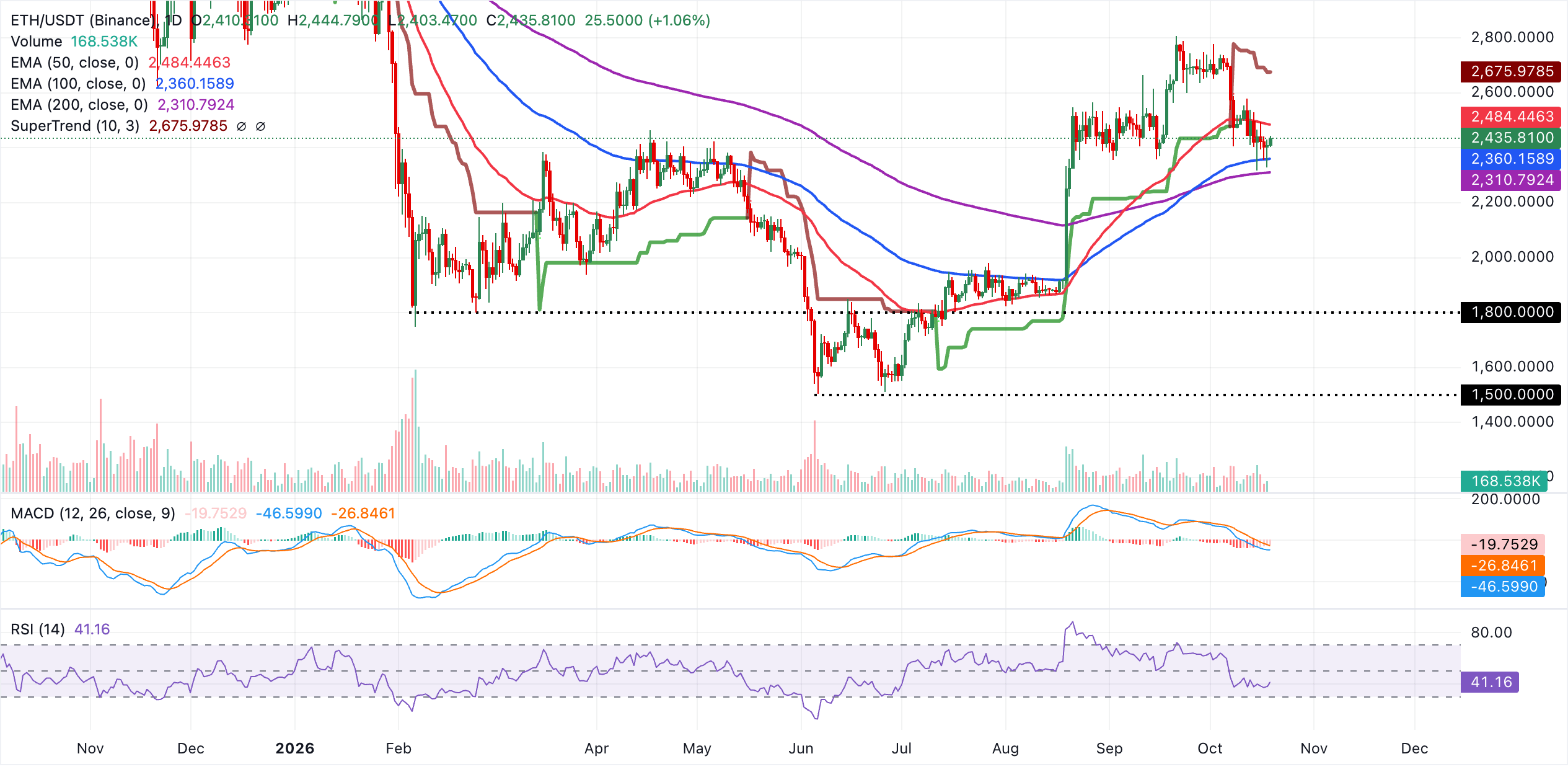
Initial resistance appears at the 50-day EMA around $2,484, and a daily close above this barrier would open the way toward the SuperTrend resistance zone near $2,676. On the downside, immediate support is at the 100-day EMA near $2,360, with the 200-day EMA near $2,311 acting as a more strategic floor. A break below this level would likely strengthen the bearish tone and expose deeper losses.
XRP, meanwhile, trades above $1.31, extending a corrective phase with a bearish near-term bias as price holds beneath all the key moving averages. The 100-day EMA around $1.34 is the first overhead cap, followed by a tight cluster of the 200-day and 50-day EMAs just under $1.38, reinforcing the impression that the market is still trading within a broader downside structure defined by the descending trend line.
Momentum is soft, with the RSI near 39 and the MACD histogram negative but slightly improving, hinting at waning downside pressure rather than a confirmed bullish reversal.
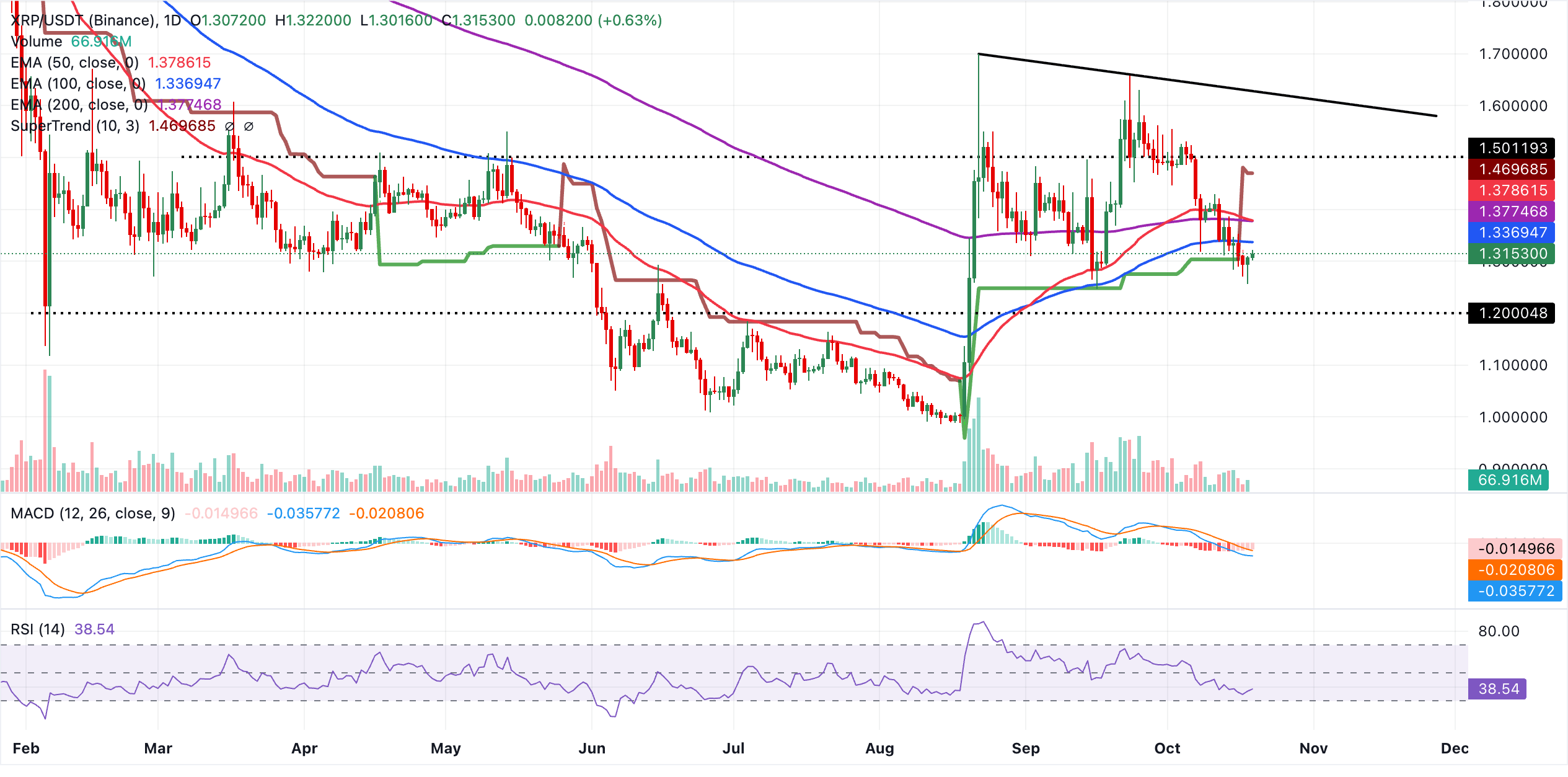
Initial resistance lies at the 100-day EMA at $1.34, where a daily close above would be needed to ease immediate selling pressure. Beyond that, the 200-day EMA at $1.38 and the 50-day EMA at $1.38 form a more substantial barrier, while the SuperTrend line near $1.47 marks a higher resistance zone that would have to be reclaimed to negate the prevailing bearish structure.
With no clear nearby moving-average or structural support on the daily chart, any fresh dip from current levels would leave XRP vulnerable to probing lower chart levels until new demand emerges on the daily timeframe.
(The technical analysis of this story was written with the help of an AI tool. Know more.)
Crypto ETF FAQs
An Exchange-Traded Fund (ETF) is an investment vehicle or an index that tracks the price of an underlying asset. ETFs can not only track a single asset, but a group of assets and sectors. For example, a Bitcoin ETF tracks Bitcoin’s price. ETF is a tool used by investors to gain exposure to a certain asset.
Yes. The first Bitcoin futures ETF in the US was approved by the US Securities & Exchange Commission in October 2021. A total of seven Bitcoin futures ETFs have been approved, with more than 20 still waiting for the regulator’s permission. The SEC says that the cryptocurrency industry is new and subject to manipulation, which is why it has been delaying crypto-related futures ETFs for the last few years.
Yes. The SEC approved in January 2024 the listing and trading of several Bitcoin spot Exchange-Traded Funds, opening the door to institutional capital and mainstream investors to trade the main crypto currency. The decision was hailed by the industry as a game changer.
The main advantage of crypto ETFs is the possibility of gaining exposure to a cryptocurrency without ownership, reducing the risk and cost of holding the asset. Other pros are a lower learning curve and higher security for investors since ETFs take charge of securing the underlying asset holdings. As for the main drawbacks, the main one is that as an investor you can’t have direct ownership of the asset, or, as they say in crypto, “not your keys, not your coins.” Other disadvantages are higher costs associated with holding crypto since ETFs charge fees for active management. Finally, even though investing in ETFs reduces the risk of holding an asset, price swings in the underlying cryptocurrency are likely to be reflected in the investment vehicle too.
인기 기사
1British Pound hits one-month high against Japanese Yen20.8403: Euro struggles to find a bottom against British Pound as violence shocks France 3New Zealand Dollar extends winning streak against US Dollar, NZ Q3 CPI data in focus4Natural gas: Global price convergence delayed until 2028 - Societe General5Oil: High prices seen easing only gradually – Commerzbank6Australian Dollar: Aussie holds near highs against US Dollar - BBH7Canadian Dollar: Limited gains against US Dollar on rate bets - ING8USD/JPY Price Forecast: 20-day EMA near continues to act as dynamic support9Gold stalls below $4,200 as Fed rate-hike bets limit upside
실시간 시세


TECHNICAL에 대한 모든 것
버터플라이 패턴 트레이딩: 버터플라이 하모닉 패턴 식별 및 매매 방법
상승 쐐기형 패턴이란 무엇이며 어떻게 매매에 활용할까요?
하락 삼각형 패턴이란 무엇이며, 이를 활용한 매매 방법은?
축적, 조작 및 분배(AMD): ICT 파워 오브 3 트레이딩 가이드
트레이딩 백테스팅: 백테스팅이란 무엇이며 전략을 어떻게 백테스트하는가
RSI 다이버전스: 강세, 약세 및 히든 다이버전스 설명
ICT 트레이딩이란 무엇인가요? 이너 서클 트레이더(Inner Circle Trader) 개념 설명
지지선과 저항선: 의미, 유형, 레벨을 그리는 방법 및 트레이딩 전략
유동성이란 무엇인가요? 트레이딩 및 금융시장에서의 의미

소셜 미디어












이 웹사이트에 제공된 정보는 일반적인 성격의 정보일 뿐이며 개인 맞춤형 금융 자문을 구성하지 않습니다. 이 웹사이트의 정보를 바탕으로 행동하기 전에, 귀하의 목표, 재정 상황 및 필요에 비추어 해당 정보의 적합성을 고려해야 합니다. CFD 및 FX 마진 계약에 대한 투자는 상당한 위험을 수반하며 모든 투자자에게 적합하지 않을 수 있습니다. 귀하는 최초 예치금보다 더 큰 손실을 입을 수 있습니다. 귀하는 기초자산에 대한 소유권이나 어떠한 이해관계도 보유하지 않습니다. 거래를 시작하기 전에 독립적인 자문을 구하고 관련 위험을 충분히 이해하시기를 권장합니다. 웹사이트에 기재된 상품을 취득하기 전에 공시 문서를 읽고 검토하는 것이 중요합니다. 이 웹사이트에서 제공되는 정보 및 광고는 그러한 사용이 현지 법률 및 규정에 위배되는 국가 또는 관할권의 개인이 사용하도록 의도된 것이 아닙니다. 이 웹사이트에서 제공되는 상품 및 서비스는 미국, 말레이시아 및 태국 거주자를 대상으로 하지 않습니다.
TMGM은 다양한 관할권에서 승인 및 규제를 받고 있습니다.
TMGM으로 거래하는 Trademax Australia Limited는 호주 증권투자위원회(ASIC)의 규제를 받으며, AFSL 번호 436416이고 Level 28, One International Tower, 100 Barangaroo Avenue, 2000 Sydney, NSW Australia에 위치하고 있습니다.
이메일: support@tmgm.com.au
TMGM으로 거래하는 Trademax Global Limited는 바누아투 금융서비스위원회(VFSC)의 승인 및 규제를 받으며, 등록 번호 40356이고 1276, Kumul Highway, Port Vila, Vanuatu, Republic of Vanuatu에 등록되어 있습니다.
이메일: support@tmgm.com
Trademax Global Markets (SE) Limited(이하 TMGM)는 세이셸 금융청(FSA)의 인가 및 규제를 받으며, 허가 번호는 SD224입니다. 회사는 세이셸 마헤, 프로비던스 에스테이트 ABIS 센터, 사무실 번호 13에 등록되어 있습니다.
이메일: support@tmgm.com
TMGM으로 거래하는 Trademax Global Markets (International) Pty Ltd는 모리셔스 금융서비스위원회(FSC)의 승인 및 규제를 받으며 라이선스 번호 GB22201012이고, 33, Edith Cavell Street C/o IQ EQ Fund Services (Mauritius) Ltd Port Louis, 11324 Mauritius에 등록되어 있습니다.
이메일: support@tmgm.com
Copyright © TMGM. All rights reserved