

Торговля
Изучите широкий спектр рынков с конкурентными ценами, высокой ликвидностью и передовыми торговыми инструментами.
Узнать больше 
Платформа
Торгуйте без сбоев на мощной платформе TMGM, созданной для скорости, точности и превосходного торгового опыта.
Узнать больше Торговая платформа
Торговые инструменты
Академия
Изучите основы торговли с помощью материалов для начинающих, включая руководства, вебинары и аналитические обзоры рынка.
Узнать больше Новости и аналитика
Получайте актуальные рыночные обновления и экспертную аналитику, чтобы быть на шаг впереди торговых возможностей
Узнать больше Новости и аналитика
О нас
Узнайте, что отличает TMGM — наше глобальное присутствие, надежное регулирование и приверженность инновациям в трейдинге.
Узнать больше Почему выбирают TMGM
Спонсорство
Canadian Dollar barely moves on Fed rate hold following BoC hike
- USD/CAD swings around 1.4050 on the BoC hike and barely moves on the Fed hold.
- The BoC's first rate rise since July 2023 takes it to 2.50% from 2.25%.
- Canada's August GDP is out Friday, against Statistics Canada's 0.2% estimate.
The Bank of Canada (BoC) raised its rate to 2.50% on Wednesday and the Fed held at 3.75%-4.00%, so the Fed's lead shrank by a quarter-point in one session. USD/CAD went through 1.4050 in both directions in the five-minute bar on the BoC release, and its dip on the Fed's statement stopped above the low it set before either decision. It's trading below 1.4050.

It's the BoC's first increase since July 2023, made to stop high energy prices spreading into other prices, and it leaves the Fed's lead at 1.25-1.50 points. The Monetary Policy Report (MPR) raised the 2027 inflation forecast to 3.1% from 2.0% and doesn't have inflation back near 2% until mid-2028. BoC Senior Deputy Governor Rogers said policymakers broadly agreed that inflation risks had risen.
BoC Governor Macklem said the rate is still low enough not to restrain growth, and the same report raised the 2026 growth forecast to 1.0% from 0.7%. The BoC said it may need to raise again but will proceed carefully. TD Economics expects one more, to 2.75%, which would cut the Fed's current lead to 1.00-1.25 points.
On the calendar
Statistics Canada publishes August Gross Domestic Product (GDP) at 12:30 GMT on Friday, against its own advance estimate of a 0.2% rise. US third-quarter growth and the Personal Consumption Expenditures Price Index (PCE) for September land a day earlier, also at 12:30 GMT. Both feed the next decisions, which the Fed and the BoC both announce on December 9.
Fed Chair Warsh faces reporters from 18:30 GMT on Wednesday, after the BoC has already moved. He told the International Monetary Fund (IMF) meetings on October 16 that other central banks share his worry about high inflation. What he says about December bears on whether the Fed's lead over the BoC widens again on December 9.
On the charts
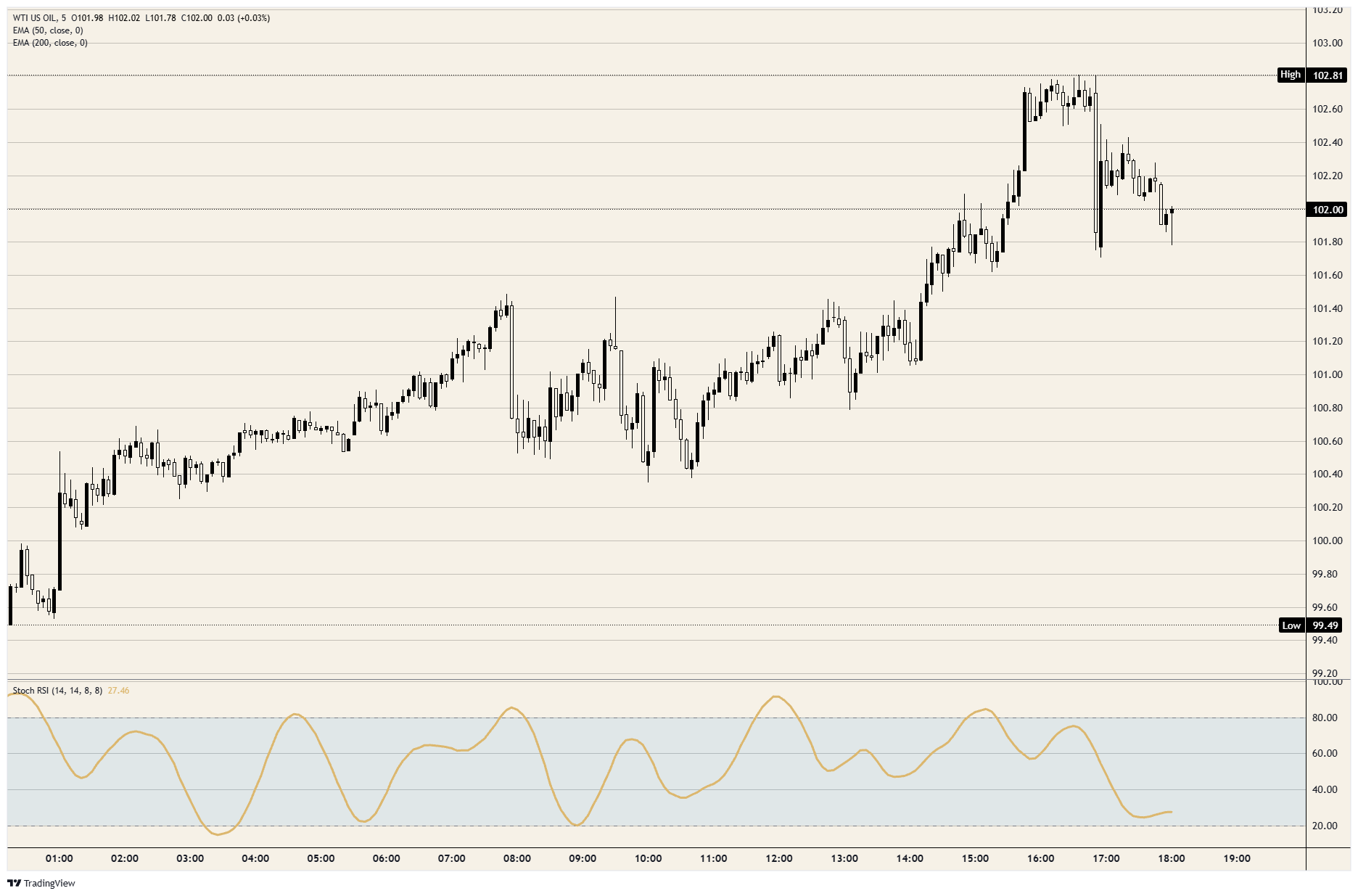
The pair has traded between just above 1.4000 and short of 1.4100 on Wednesday, with the high set before the slide that preceded the BoC release. Since that release it has held the lower half of the range, and intraday momentum climbed toward overbought into the Fed decision.
USD/CAD 5-minute chart
Interest rates FAQs
Interest rates are charged by financial institutions on loans to borrowers and are paid as interest to savers and depositors. They are influenced by base lending rates, which are set by central banks in response to changes in the economy. Central banks normally have a mandate to ensure price stability, which in most cases means targeting a core inflation rate of around 2%. If inflation falls below target the central bank may cut base lending rates, with a view to stimulating lending and boosting the economy. If inflation rises substantially above 2% it normally results in the central bank raising base lending rates in an attempt to lower inflation.
Higher interest rates generally help strengthen a country’s currency as they make it a more attractive place for global investors to park their money.
Higher interest rates overall weigh on the price of Gold because they increase the opportunity cost of holding Gold instead of investing in an interest-bearing asset or placing cash in the bank. If interest rates are high that usually pushes up the price of the US Dollar (USD), and since Gold is priced in Dollars, this has the effect of lowering the price of Gold.
The Fed funds rate is the overnight rate at which US banks lend to each other. It is the oft-quoted headline rate set by the Federal Reserve at its FOMC meetings. It is set as a range, for example 4.75%-5.00%, though the upper limit (in that case 5.00%) is the quoted figure. Market expectations for future Fed funds rate are tracked by the CME FedWatch tool, which shapes how many financial markets behave in anticipation of future Federal Reserve monetary policy decisions.
Лучшие статьи
1Forex Today: What if the ECB…?2Australian Dollar holds firm as Fed pause exposes split over inflation3Japanese Yen weakens as Fed hold reveals hawkish divide4British Pound recovers as Fed holds rates amid hawkish split5Crude Oil barely moves on the Fed hold as Iran weighs a Qatari deal6Canadian Dollar barely moves on Fed rate hold following BoC hike7Euro edges up as the Fed holds a day before the ECB8Dollar Index dips and recovers as the Fed holds with two hike votes9WTI snaps two-day losing streak amid fresh Middle East developments
РЫНОЧНЫЕ КОТИРОВКИ

ВСЁ О FOREX
Stop Loss: What It Is, How It Works and How to Set One
Margin Call Meaning: What It Is, What Triggers It and How to Avoid One
Top 15 Weakest Currencies in the World
Top 15 Strongest Currencies in the World
Is Forex Trading Halal?
Best Time to Trade Forex
Forex Trading vs Futures Trading
Forex Trading vs Stock Trading
Forex Trading vs Crypto Trading
Начать!
Зарегистрируйтесь и получите доступ к глобальным рынкам менее чем за 3 минуты

Свяжитесь с нами









Контакты
Телефон: +61 2 8036 8388
Факс: +61 2 8036 8388
Эл. почта: support@tmgm.com
Веб-сайт: https://www.tmg-max.com



Информация, представленная на этом веб-сайте, носит исключительно общий характер и не является персональной финансовой консультацией. Прежде чем действовать на основании любой информации на этом веб-сайте, вам следует оценить ее уместность с учетом ваших целей, финансового положения и потребностей. Инвестирование в CFD и маржинальные контракты на FX сопряжено со значительными рисками и подходит не всем инвесторам. Вы можете потерять больше, чем ваш первоначальный депозит. Вы не владеете базовым активом и не имеете в нем какой-либо доли. Мы рекомендуем вам обратиться за независимой консультацией и убедиться, что вы полностью понимаете связанные с этим риски, прежде чем начинать торговлю. Важно прочитать и принять во внимание документ с раскрытием информации, прежде чем приобретать любой продукт, указанный на веб-сайте. Информация и рекламные материалы, предлагаемые на этом веб-сайте, не предназначены для использования любым лицом в любой стране или юрисдикции, где такое использование противоречило бы местным законам и нормативным актам. Продукты и услуги, предлагаемые на этом веб-сайте, не предназначены для резидентов США, Малайзии и Таиланда.
TMGM уполномочена и регулируется в различных юрисдикциях.
Trademax Australia Limited, работающая под брендом TMGM, регулируется Australian Securities and Investments Commission (ASIC), AFSL № 436416 и находится по адресу: Level 28, One International Tower, 100 Barangaroo Avenue, 2000 Sydney, NSW Australia.
Email: support@tmgm.com.au
Trademax Global Limited, работающая под брендом TMGM, уполномочена и регулируется Vanuatu Financial Services Commission (VFSC), регистрационный номер 40356, и зарегистрирована по адресу: 1276, Kumul Highway, Port Vila, Vanuatu, Republic of Vanuatu.
Email: support@tmgm.com
Trademax Global Markets (SE) Limited, работающая под брендом TMGM, уполномочена и регулируется Financial Services Authority (FSA) Сейшельских Островов, номер лицензии SD224. Компания зарегистрирована по адресу: Office No 13, Providence Estate ABIS Centre, Mahe, Seychelles.
Email: support@tmgm.com
Trademax Global Markets (International) Pty Ltd, работающая под брендом TMGM, уполномочена и регулируется Financial Services Commission, Mauritius (FSC), лицензия № GB22201012, и зарегистрирована по адресу: 33, Edith Cavell Street C/o IQ EQ Fund Services (Mauritius) Ltd Port Louis, 11324 Mauritius.
Email: support@tmgm.com
Авторское право © TMGM. Все права защищены