

Торговля
Изучите широкий спектр рынков с конкурентными ценами, высокой ликвидностью и передовыми торговыми инструментами.
Узнать больше 
Платформа
Торгуйте без сбоев на мощной платформе TMGM, созданной для скорости, точности и превосходного торгового опыта.
Узнать больше Торговая платформа
Торговые инструменты
Академия
Изучите основы торговли с помощью материалов для начинающих, включая руководства, вебинары и аналитические обзоры рынка.
Узнать больше Новости и аналитика
Получайте актуальные рыночные обновления и экспертную аналитику, чтобы быть на шаг впереди торговых возможностей
Узнать больше Новости и аналитика
О нас
Узнайте, что отличает TMGM — наше глобальное присутствие, надежное регулирование и приверженность инновациям в трейдинге.
Узнать больше Почему выбирают TMGM
Спонсорство
Japanese Yen finds support from safe-haven demand and intervention fears
- The Japanese Yen gains against all major currencies despite disappointing domestic growth data.
- Hawkish Fed expectations and elevated US Treasury yields limit the Yen's gains.
- Traders await Japan's inflation data and fresh Fed commentary this week.
USD/JPY trades slightly lower on Monday as a sell-off in tech shares from Asia to Wall Street boosts the Japanese Yen’s (JPY) safe-haven appeal, helping it gain against all its major peers. Traders also remain wary of another intervention by Japanese authorities after the pair tested the 160.00 level last week. At the time of writing, USD/JPY trades around 159.63.
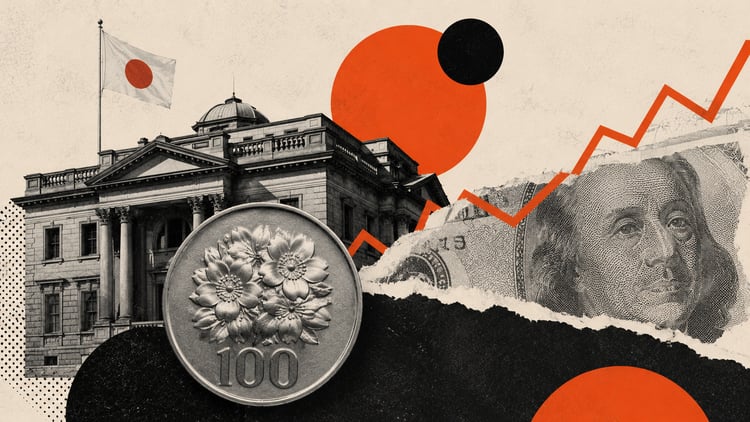
Meanwhile, a firm US Dollar (USD) keeps the Yen’s gains in check. The US Dollar Index (DXY), which tracks the Greenback against six major currencies, trades around 103.53, near its highest level since April 2025.
Last week’s hotter-than-expected US inflation data and hawkish remarks from Federal Reserve (Fed) officials have strengthened bets on further rate hikes, pushing US Treasury yields higher. Traders fully price in a December hike and expect further increases in the first quarter of 2027.
The Yen outperforms even after preliminary Gross Domestic Product (GDP) data released earlier on Monday showed that Japan’s economy unexpectedly contracted in the third quarter.
Japan growth stalls as BoJ normalization seen keeping USD/JPY supported
Analysts at Brown Brothers Harriman note that Japan’s economy “unexpectedly stalled in Q3,” with real GDP printing at “0.0% q/q (consensus: 0.1%) vs. 0.4% in Q2.” They highlight that “net exports were the biggest drag as recovering crude oil shipments lifted imports,” while “business investment and public demand supported growth.”
At the same time, “household consumption was negative for a second straight quarter,” which BBH argues “reinforc[es] the case for a gradual pace of Bank of Japan (BoJ) policy normalization.” In their view, that measured approach “will keep the US-Japan yield gap supportive of USD/JPY.”
BoJ board member Hajime Takata said on Monday that the central bank “needs to act swiftly on rate hikes after assessing domestic financial conditions and global developments.” Takata added that “overseas rates could raise Japan’s neutral rate above market expectations.” He also said the BoJ “must show resolve to stop upward price shifts, while considering impact on fx markets.”
A December BoJ rate hike remains in play despite the weak GDP reading. The central bank held its policy rate at 1.25% in October, when Takata voted for a quarter-point increase to 1.50%.
Looking ahead, traders will watch US Retail Sales on Tuesday and Japan’s October trade balance on Wednesday. Japan’s national Consumer Price Index (CPI) and the University of Michigan’s final November consumer sentiment reading are due Friday. A busy slate of Fed speeches is also in focus this week.
Japanese Yen Price Today
The table below shows the percentage change of Japanese Yen (JPY) against listed major currencies today. Japanese Yen was the strongest against the Australian Dollar.
| USD | EUR | GBP | JPY | CAD | AUD | NZD | CHF | |
|---|---|---|---|---|---|---|---|---|
| USD | 0.12% | 0.14% | -0.14% | 0.19% | 0.38% | 0.28% | -0.01% | |
| EUR | -0.12% | 0.02% | -0.28% | 0.07% | 0.27% | 0.16% | -0.13% | |
| GBP | -0.14% | -0.02% | -0.29% | 0.05% | 0.22% | 0.13% | -0.15% | |
| JPY | 0.14% | 0.28% | 0.29% | 0.35% | 0.54% | 0.44% | 0.15% | |
| CAD | -0.19% | -0.07% | -0.05% | -0.35% | 0.19% | 0.09% | -0.20% | |
| AUD | -0.38% | -0.27% | -0.22% | -0.54% | -0.19% | -0.11% | -0.39% | |
| NZD | -0.28% | -0.16% | -0.13% | -0.44% | -0.09% | 0.11% | -0.29% | |
| CHF | 0.01% | 0.13% | 0.15% | -0.15% | 0.20% | 0.39% | 0.29% |
The heat map shows percentage changes of major currencies against each other. The base currency is picked from the left column, while the quote currency is picked from the top row. For example, if you pick the Japanese Yen from the left column and move along the horizontal line to the US Dollar, the percentage change displayed in the box will represent JPY (base)/USD (quote).
Лучшие статьи
1Австралийский доллар остается под давлением на фоне сокращения профицита торгового баланса Китая в октябре2Профицит торгового баланса Китая в октябре сократился сильнее ожиданий и составил 712,72 млрд юаней.3Индекс доллара США (DXY) почти не меняется вблизи отметки 101,70 в ожидании данных по CPI в США на фоне неопределенности вокруг Ирана4Экспорт Китая в октябре вырос на 35,2% в годовом выражении, превысив ожидания в 33,5%.5Импорт Китая в октябре превысил ожидания (32%): фактическое значение составило 41,6% г/г6Торговый баланс Китая составил $105,28 млрд, что ниже ожиданий ($125,8 млрд) в октябре.7Сальдо торгового баланса Китая (CNY) в октябре составило 712,78 млрд, что ниже ожиданий в 859 млрд.8Экспорт Китая (г/г, CNY) в октябре снизился до 28,7% с предыдущих 29,6%.9Новозеландский доллар стабилизировался: переговоры по Ирану не смогли подтолкнуть пару NZD/USD вверх.


Начать!
Зарегистрируйтесь и получите доступ к глобальным рынкам менее чем за 3 минуты

Свяжитесь с нами









Контакты
Телефон: +61 2 8036 8388
Факс: +61 2 8036 8388
Эл. почта: support@tmgm.com
Веб-сайт: https://www.tmg-max.com



Информация, представленная на этом веб-сайте, носит исключительно общий характер и не является персональной финансовой консультацией. Прежде чем действовать на основании любой информации на этом веб-сайте, вам следует оценить ее уместность с учетом ваших целей, финансового положения и потребностей. Инвестирование в CFD и маржинальные контракты на FX сопряжено со значительными рисками и подходит не всем инвесторам. Вы можете потерять больше, чем ваш первоначальный депозит. Вы не владеете базовым активом и не имеете в нем какой-либо доли. Мы рекомендуем вам обратиться за независимой консультацией и убедиться, что вы полностью понимаете связанные с этим риски, прежде чем начинать торговлю. Важно прочитать и принять во внимание документ с раскрытием информации, прежде чем приобретать любой продукт, указанный на веб-сайте. Информация и рекламные материалы, предлагаемые на этом веб-сайте, не предназначены для использования любым лицом в любой стране или юрисдикции, где такое использование противоречило бы местным законам и нормативным актам. Продукты и услуги, предлагаемые на этом веб-сайте, не предназначены для резидентов США, Малайзии и Таиланда.
TMGM уполномочена и регулируется в различных юрисдикциях.
Trademax Australia Limited, работающая под брендом TMGM, регулируется Australian Securities and Investments Commission (ASIC), AFSL № 436416 и находится по адресу: Level 28, One International Tower, 100 Barangaroo Avenue, 2000 Sydney, NSW Australia.
Email: support@tmgm.com.au
Trademax Global Limited, работающая под брендом TMGM, уполномочена и регулируется Vanuatu Financial Services Commission (VFSC), регистрационный номер 40356, и зарегистрирована по адресу: 1276, Kumul Highway, Port Vila, Vanuatu, Republic of Vanuatu.
Email: support@tmgm.com
Trademax Global Markets (SE) Limited, работающая под брендом TMGM, уполномочена и регулируется Financial Services Authority (FSA) Сейшельских Островов, номер лицензии SD224. Компания зарегистрирована по адресу: Office No 13, Providence Estate ABIS Centre, Mahe, Seychelles.
Email: support@tmgm.com
Trademax Global Markets (International) Pty Ltd, работающая под брендом TMGM, уполномочена и регулируется Financial Services Commission, Mauritius (FSC), лицензия № GB22201012, и зарегистрирована по адресу: 33, Edith Cavell Street C/o IQ EQ Fund Services (Mauritius) Ltd Port Louis, 11324 Mauritius.
Email: support@tmgm.com
Авторское право © TMGM. Все права защищены