
News & AnalysisCareer

Accelerating inflation has prompted the Swiss National Bank (SNB) to keep a close watch on possible second-round effects ahead of its next monetary policy decision, Vice Chairman Antoine Martin said on Sunday, according to Reuters.
With inflation continuing to climb since the bank's previous policy decision, Martin said the SNB was closely tracking developments.
Here in Switzerland, inflation has remained within the stability range since the summer of 2023.
But we are monitoring the situation closely. Since the last assessment of the economic and monetary situation, inflation has continued to rise, both internationally and in Switzerland.
Switzerland differs from other major currency areas, where inflation is well above 2%, sometimes fueled by rising energy prices.
We are paying particular attention to possible second-round effects. For December, everything will depend on our assessment at that time.
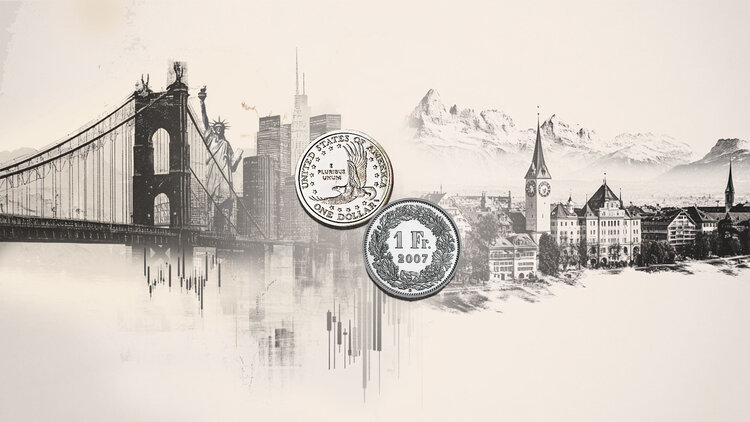
Trading around 0.8405 at the time of writing, USD/CHF is up 0.11%. The Swiss franc (CHF) showed no discernible reaction to SNB Vice Chairman Martin's remarks.
Switzerland's central bank, the Swiss National Bank (SNB), operates independently with a mandate to safeguard price stability over the medium and long term. It defines price stability as an annual increase of less than 2% in the Swiss Consumer Price Index (CPI). To meet that objective, the SNB seeks to keep monetary conditions appropriate, with those conditions determined by interest rate levels and exchange rates.
Guided by its price stability objective, the Swiss National Bank (SNB) Governing Board sets the appropriate policy rate. If inflation exceeds its target, or is forecast to do so in the foreseeable future, the bank will seek to curb excessive price increases by raising that rate. The resulting higher yields make Switzerland more attractive to investors, so higher interest rates generally support the Swiss franc (CHF). Lower rates, by contrast, tend to put downward pressure on CHF.
To prevent excessive appreciation of the Swiss franc (CHF) against other currencies, the Swiss National Bank (SNB) has regularly intervened in the foreign exchange market. A strong CHF undermines the competitiveness of Switzerland's substantial export sector. From 2011 to 2015, the SNB maintained a peg to the euro to restrict the franc's gains against the single currency. Interventions draw on the bank's sizeable foreign exchange reserves and typically involve purchases of foreign currencies, including the US dollar and the euro. When inflation is high, especially when driven by energy costs, the SNB holds back from market intervention: a stronger CHF reduces the cost of energy imports and softens the price shock for Swiss households and businesses.
March, June, September and December are the months in which the SNB holds its quarterly monetary policy assessments. Every assessment culminates in a monetary policy decision and the release of a medium-term inflation forecast.







Phone: +61 2 8036 8388
Fax: +61 2 8036 8388
Email: support@tmgm.com



The information provided on this website is of a general nature only and does not constitute personal financial advice. Before acting on any information on this website, you should consider the suitability of the information in relation to your objectives, financial situation and needs. Investing in CFDs and FX Margin Contracts carries significant risks and is not suitable for all investors. You may lose more than your initial deposit. You do not own, or have, any interest in the underlying asset. We recommend that you seek independent advice and ensure you fully understand the risks involved before trading. It is important that you read and consider the disclosure document before you acquire any product listed on the website. The information and advertisements offered on this website are not intended for use by any person in any country or jurisdiction where such use would be contrary to local laws and regulations. The Products and Services offered on this website are not intended for residents of the United States, Malaysia and Thailand.
TMGM is authorized and regulated in various jurisdictions.
Trademax Australia Limited, trading as TMGM, is regulated by the Australian Securities and Investments Commission (ASIC), AFSL no. 436416 and is located at Level 28, One International Tower, 100 Barangaroo Avenue, 2000 Sydney, NSW Australia.
Email: support@tmgm.com.au
Trademax Global Limited, trading as TMGM, is authorized and regulated by the Vanuatu Financial Services Commission (VFSC), registration number 40356 and registered at 1276, Kumul Highway, Port Vila, Vanuatu, Republic of Vanuatu.
Email: support@tmgm.com
Trademax Global Markets (SE) Limited, trading as TMGM, is authorized and regulated by the Financial Services Authority (FSA) of Seychelles, with license number SD224. The company is registered at Office No 13, Providence Estate ABIS Centre, Mahe, Seychelles.
Email: support@tmgm.com
Trademax Global Markets (International) Pty Ltd, trading as TMGM, is authorized and regulated by the Financial Services Commission, Mauritius (FSC) with license no. GB22201012, and registered at 33, Edith Cavell Street C/o IQ EQ Fund Services (Mauritius) Ltd Port Louis, 11324 Mauritius.
Email: support@tmgm.com
Copyright © TMGM. All rights reserved


